Most businesses come to battery storage asking the same question: how big does it need to be? A system that's too small won't shift enough demand away from expensive grid electricity to justify the investment. One that's too large ties up capital in capacity you'll never use.
Getting it right comes down to three things: your actual consumption data, your tariff, and what you want the battery to do. The table below gives a starting point based on common commercial scenarios. The sections that follow explain the logic behind each one.
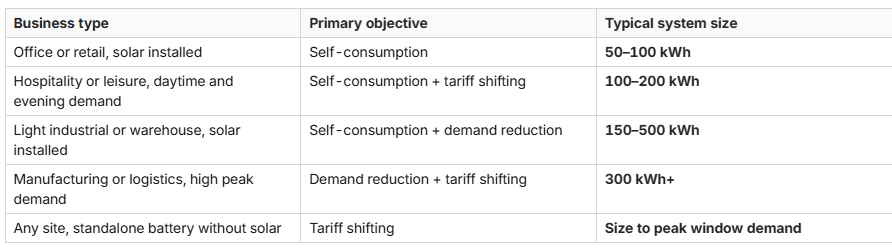
These are starting points, not specifications. The right size for your site depends on your half-hourly consumption data, your tariff, and what you're asking the battery to do.
Start with half-hourly data, not your bill
A monthly electricity bill tells you how much you've spent. It doesn't tell you when you're drawing power or how sharply your demand peaks. Those details are what battery sizing depends on.
The starting point on every project we do is half-hourly interval data, usually a full year's worth pulled from your smart meter or AMR system. Your energy supplier can provide it as a CSV. It shows exactly when your demand spikes, by how much, and for how long. Without it, any sizing conversation is speculative.
What do you want the battery to do?
There are three main jobs a commercial battery can do, and the right size depends on which of them you're asking it to perform.
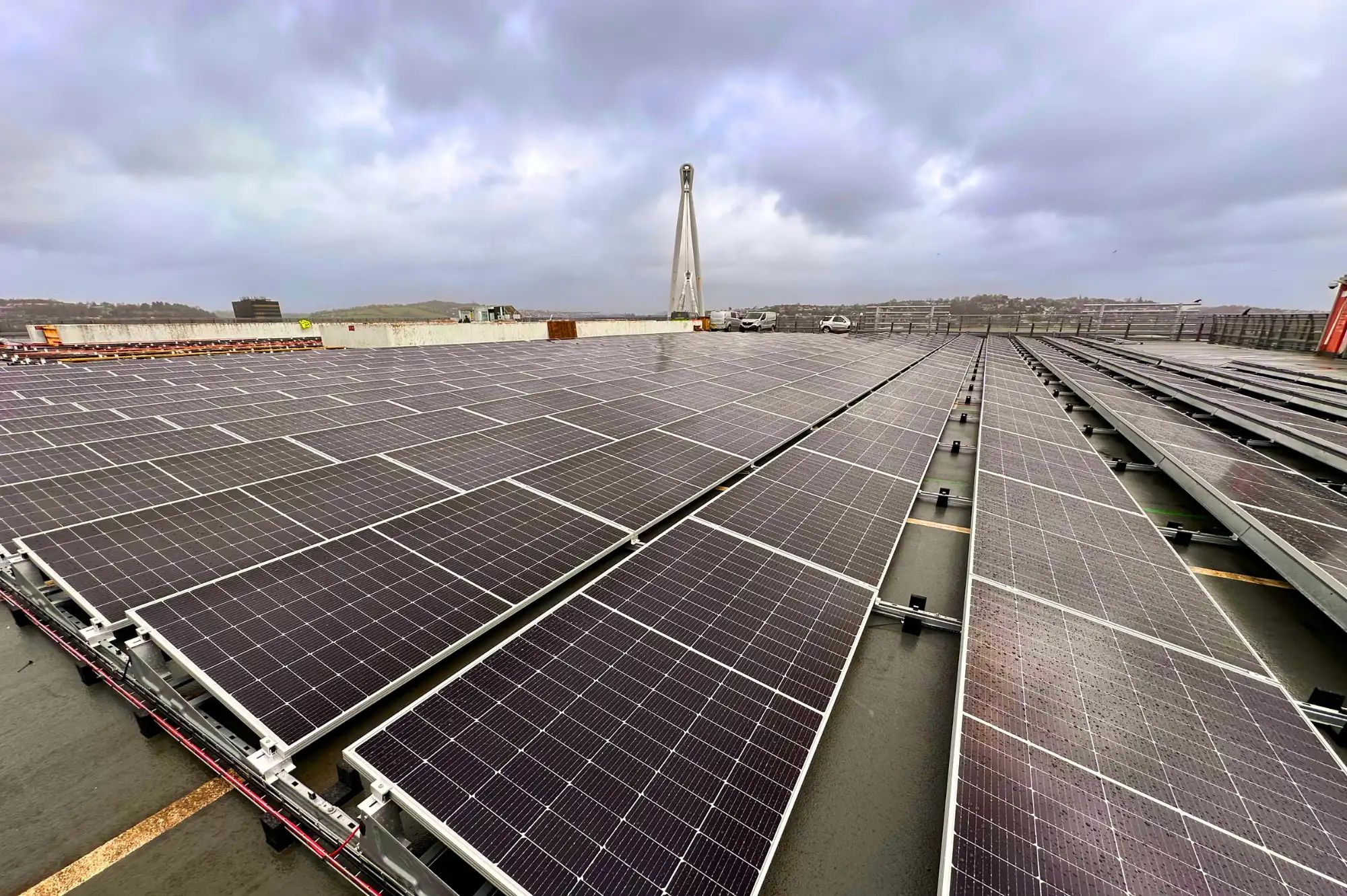
For solar self-consumption: if your solar system generates more than your site uses during daylight hours, that surplus gets exported at a low rate. A battery stores it instead so you use it in the evening or overnight at the full value of avoiding an import. The rule of thumb here is to match battery capacity to your daily solar surplus. If a 100 kWp system typically generates 400 kWh on a summer day but you only use 200 kWh on-site during daylight hours, a 150 to 200 kWh battery captures most of that surplus without oversizing.
For tariff shifting: if you're on a time-of-use tariff with a meaningful spread between cheap overnight rates and expensive daytime ones, a battery charges on cheap power and discharges during the expensive window. To cover a 50 kW load across a four-hour peak window, you need around 200 kWh of usable capacity. Factor in a round-trip efficiency loss of 10 to 15% and the installed capacity needs to sit slightly above that.
For peak shaving: many commercial meters record your maximum demand in kVA, and suppliers charge a standing element based on that peak. A battery sized to shave your highest peaks, typically the top 20 to 30%, reduces that charge and in some cases drops you into a cheaper tariff bracket altogether.
In practice, most projects combine two or three of these objectives, which is why the analysis matters more than any headline figure.
A properly sized battery shifts generation from low-value export to full-value on-site use — the difference between a 6-year and a 4-year payback on many projects.
Where your tariff structure fits in
The economics of battery storage depend heavily on the spread between your cheapest and most expensive electricity rates. If you're on a flat tariff with little variation across the day, the payback case is more modest and sizing becomes more conservative. Businesses on half-hourly metering with high maximum demand charges often see the strongest returns, because reducing those peaks has a compounding effect on annual bills.
A real example
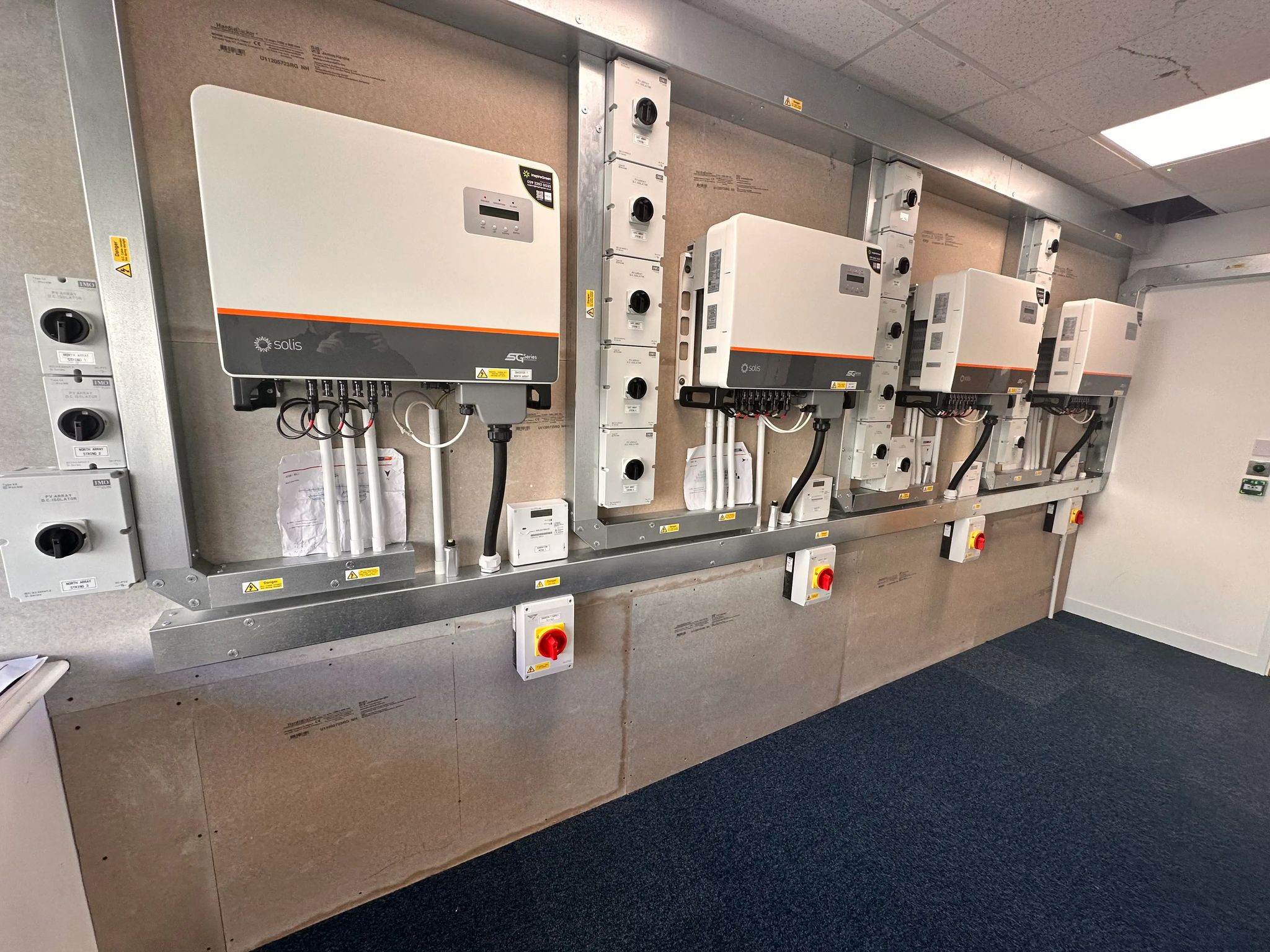
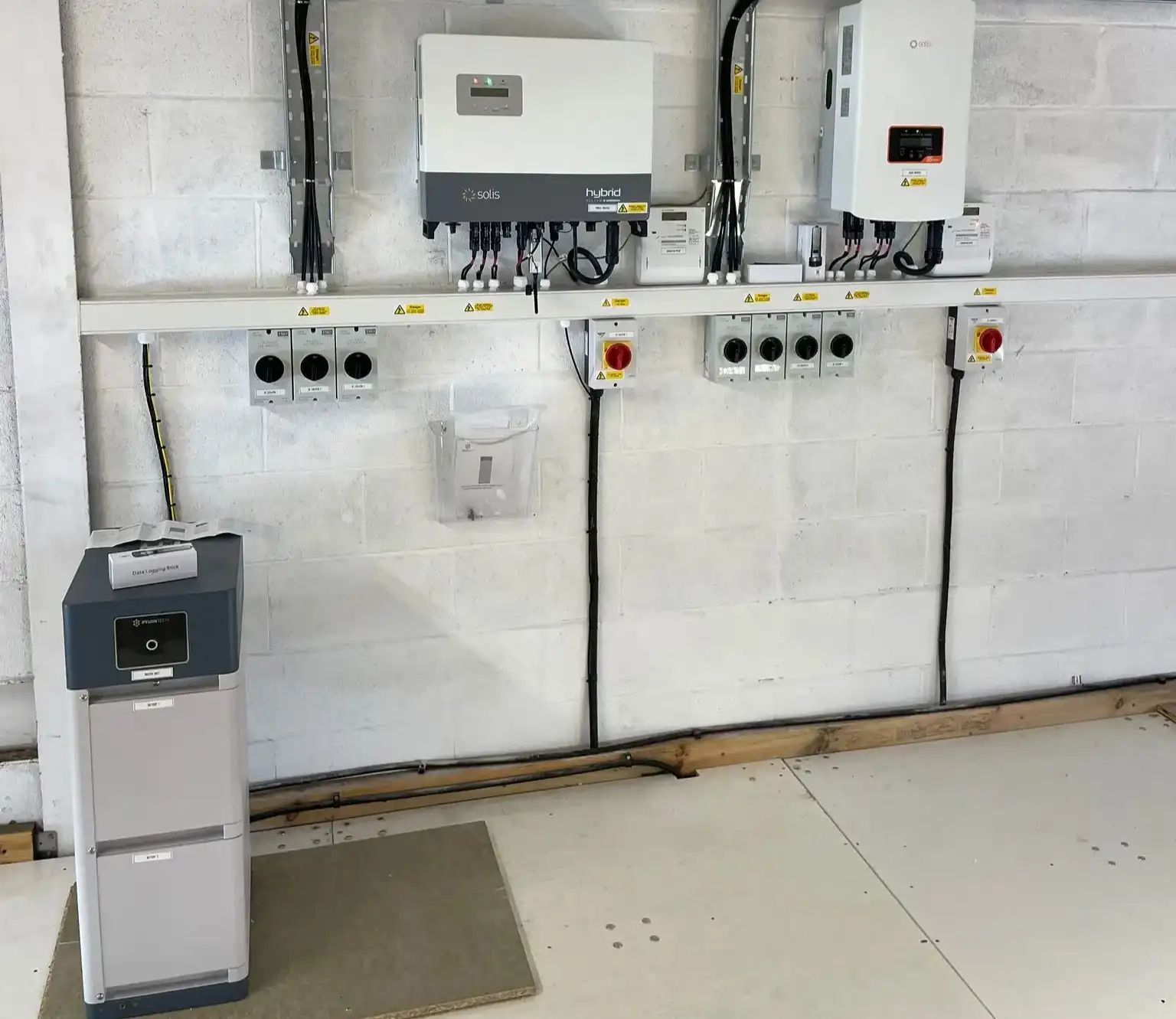
At the larger end, the 1.1 MWh system we installed at Pulse Plastics was sized around the site's industrial demand profile and half-hourly meter data. That scale suits a manufacturing operation with large, consistent loads. Most commercial premises such as offices, retail units, hospitality and light industrial, end up somewhere in the 50 to 300 kWh range when paired with a solar installation. Standalone battery projects without solar tend to be sized larger, as they're doing more of the heavy lifting on tariff shifting.
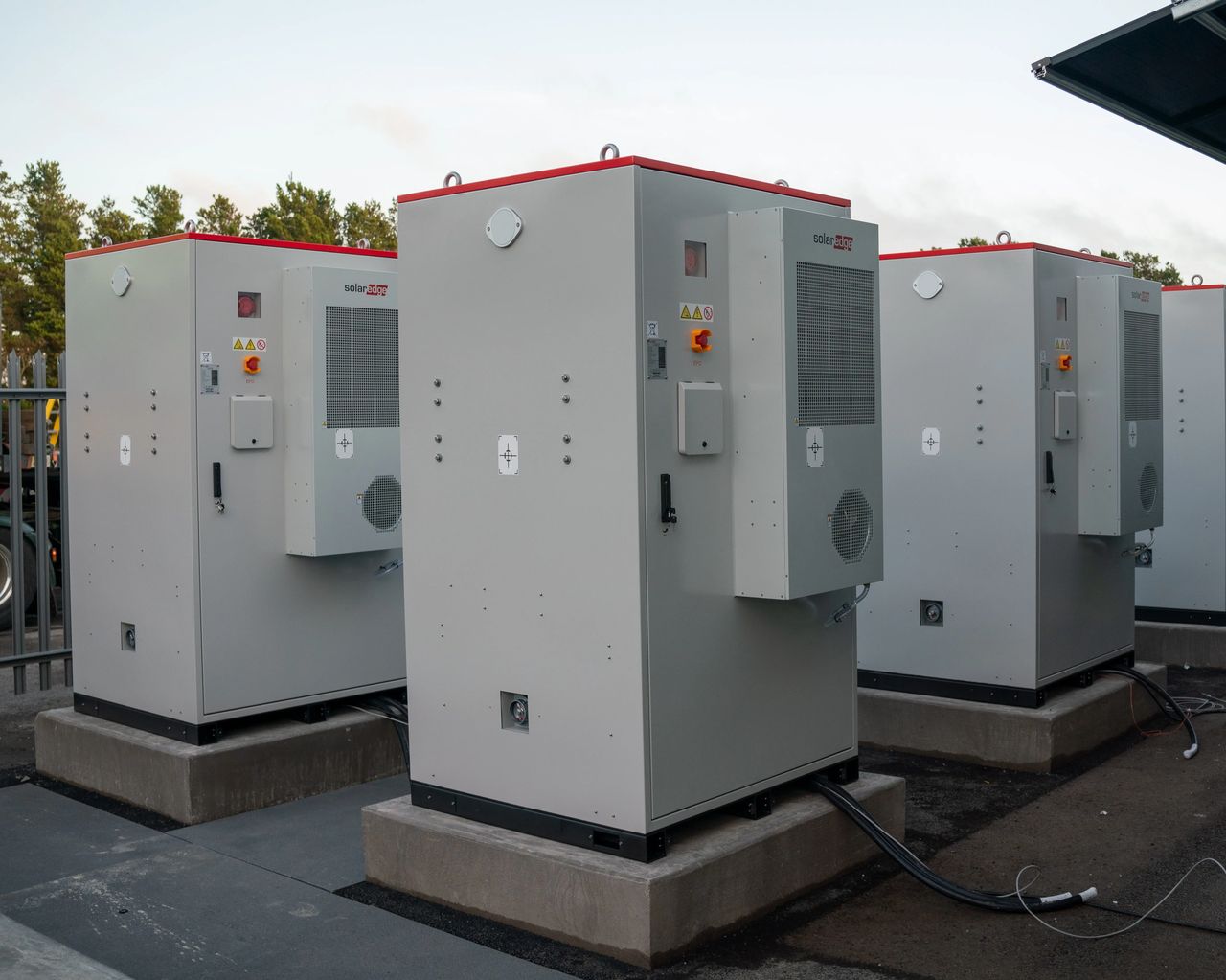
The 1.1 MWh system at Pulse Plastics — sized to the site's industrial demand profile.
Build in headroom for future demand
If you're planning to add EV charging, expand production, or take on more floor space in the next few years, it's worth building some headroom into the spec. Battery systems can sometimes be extended with additional capacity units, but it's not always straightforward depending on the hardware chosen. A system that's undersized from day one is a frustrating position to be in.
The honest answer
There's no universal figure because every site has a different load profile, tariff structure, and objectives. The businesses that get the most from battery storage are the ones that start with good data and size the system to their actual usage, not to a brochure figure.
Not sure what size you need?
If you'd like us to look at your site's consumption data and work out what size system makes sense, get in touch with our team. We offer a free, no-obligation survey and will give you a honest recommendation based on your actual usage.
Call us on 02922 520033 or send us an email hello@inspiregreen.co.uk

.webp)