Generating solar power and using it are two different things
Most people judge a solar system by one number: how much it generates. It feels like the obvious measure. More generation, more saving.
It isn't quite that simple. The size of your bill reduction depends far less on how much power your roof makes, and far more on how much of that power you use on site, at the moment it's made. That idea has a name, self-consumption, and it's the single biggest factor in whether a commercial solar system pays back in four years or ten.
Here's how it works, and why it decides the return on almost every system we install.
Using power is worth far more than selling it
When your panels generate electricity, that power goes one of two places.
If you use it on site as it's made, it replaces electricity you would otherwise have bought from the grid. You avoid paying the full import price for every unit you cover yourself.
If you don't use it, it gets exported back to the grid, and you're paid an export rate for it. That rate is a fraction of what you pay to import. So a unit of solar you use yourself is worth several times more than the same unit sold back.
That gap is where the savings live. Two buildings can have identical roofs, identical panels, and identical generation, and still see very different returns, purely because one uses more of its own power than the other.
Why some sites pay back faster than others
The deciding factor is timing. Solar generates most in the middle of the day. So the businesses that benefit most are the ones using the most electricity during daylight hours.
A site that's busy through the day uses most of what it generates the moment it's produced. Think of a bakery with ovens and chillers running, a workshop with machinery going, an office full of people and equipment. High self-consumption, faster payback.
A building that sits mostly empty during the day generates the same amount of power but uses less of it on site. More gets exported at the lower rate, so the return takes longer.
This is why a generic quote based on roof size tells you very little. The roof tells you how much you could generate. Your demand profile tells you how much that generation is actually worth to you.
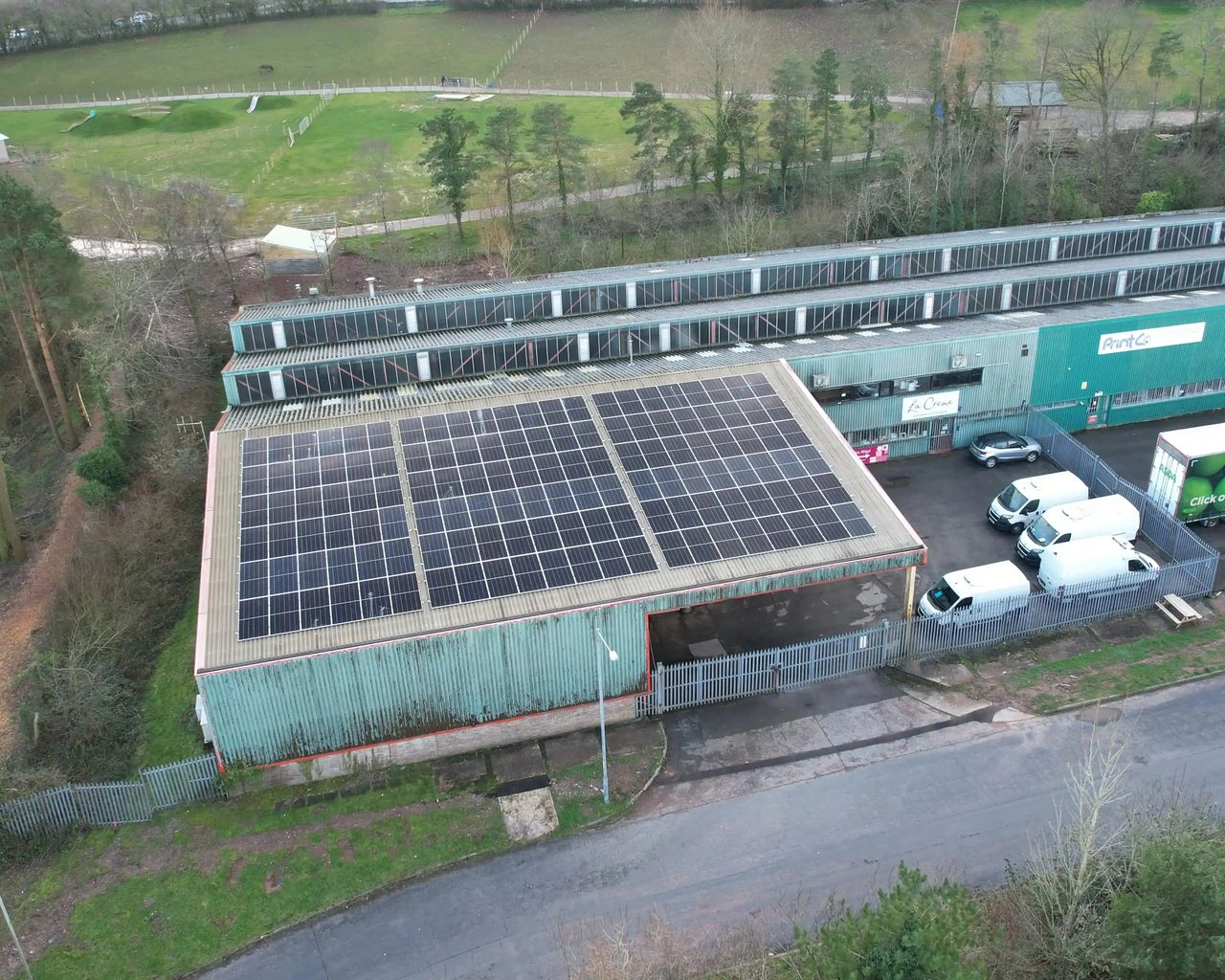 La Crème Patisserie, Cwmbran. An 85.14 kWp array sized to the bakery's working-day demand.
A real example: a Cwmbran bakery
La Crème Patisserie is a family-run bakery in Cwmbran producing up to 50,000 pieces of cake a week. Ovens, mixers, chillers and freezers draw power right through the working day, with the heaviest load falling in daylight hours.
We started with the bakery's electricity bill, not its roof. The site uses around 240 MWh a year, and the question we set out to answer was how much of that we could shift off the grid and onto the building itself. We sized the system to the demand the bakery actually carries through a working day, then checked it against the roof.
That worked out at an 85.14 kWp array generating roughly 86,000 kWh a year. Because a production kitchen draws its heaviest load exactly when the panels are generating, most of that power is used the moment it's made rather than sold back cheaply. That timing is what brings payback down to about three and a half years and leaves the rest of the system's 25-year life as electricity the bakery is no longer buying.
The same array on a building that emptied out at lunchtime would have taken far longer to pay for itself. The numbers stacked up because the demand and the generation lined up.
Where batteries change the maths
Not every business can shift its activity into daylight hours. If you generate more than you can use during the day, a battery lets you store the surplus and use it later, in the evening or overnight, instead of exporting it cheaply and buying it back at full price after dark.
For sites with a lot of evening or early-morning demand, this is significant. A battery sized to your half-hourly demand and tariff typically pushes solar self-consumption from around 50% up to 90%. That's a large share of your generation moving from the low export rate to the full value of replacing imported power.
Whether a battery is worth it depends entirely on your demand pattern and tariff, which is why it's a question we answer with your actual half-hourly data rather than a rule of thumb.
The real question to ask
When you're weighing up solar for your building, the instinct is to ask how much your roof could generate. That's the wrong starting point.
The better question is how much of that generation you would actually use on site. That's what determines your payback, and it's the first thing we look at when we size a system. We design around your half-hourly demand, not your roof area, because the demand is what turns generation into savings.
If you'd like to know how much of your own demand you could be covering on site, we offer a free, no-obligation survey that starts with your usage, not a brochure.