Of the 1.85 million buildings with solar across the UK, most panels are fixed to a roof using a hook and rail system, or installed as integrated panels that sit within the roof structure itself. These fixing methods are designed to keep panels secure on your roof without overloading roof tiles or compromising weatherproofing.
If you’re considering solar panels for your home or business premises, the exact way these will be installed will depend on your roof type and the system you choose.
In this guide, we’ll explain the most common fixing methods for solar panels and what they mean for different roof types.
The Basic Solar Panel Fixing System
Put simply, solar panels are fixed to a roof using a hook and rail system that’s compatible with your roof type.
The process begins with fixing roof hooks into the structural timber of the roof. These hooks support aluminium mounting rails, which run horizontally across the roof and provide a secure base for the panels.
The solar panels are then positioned onto the rails and held in place using clamps. As a final step, your installer will usually add rail end caps, secure the cabling and fit bird protection where needed.
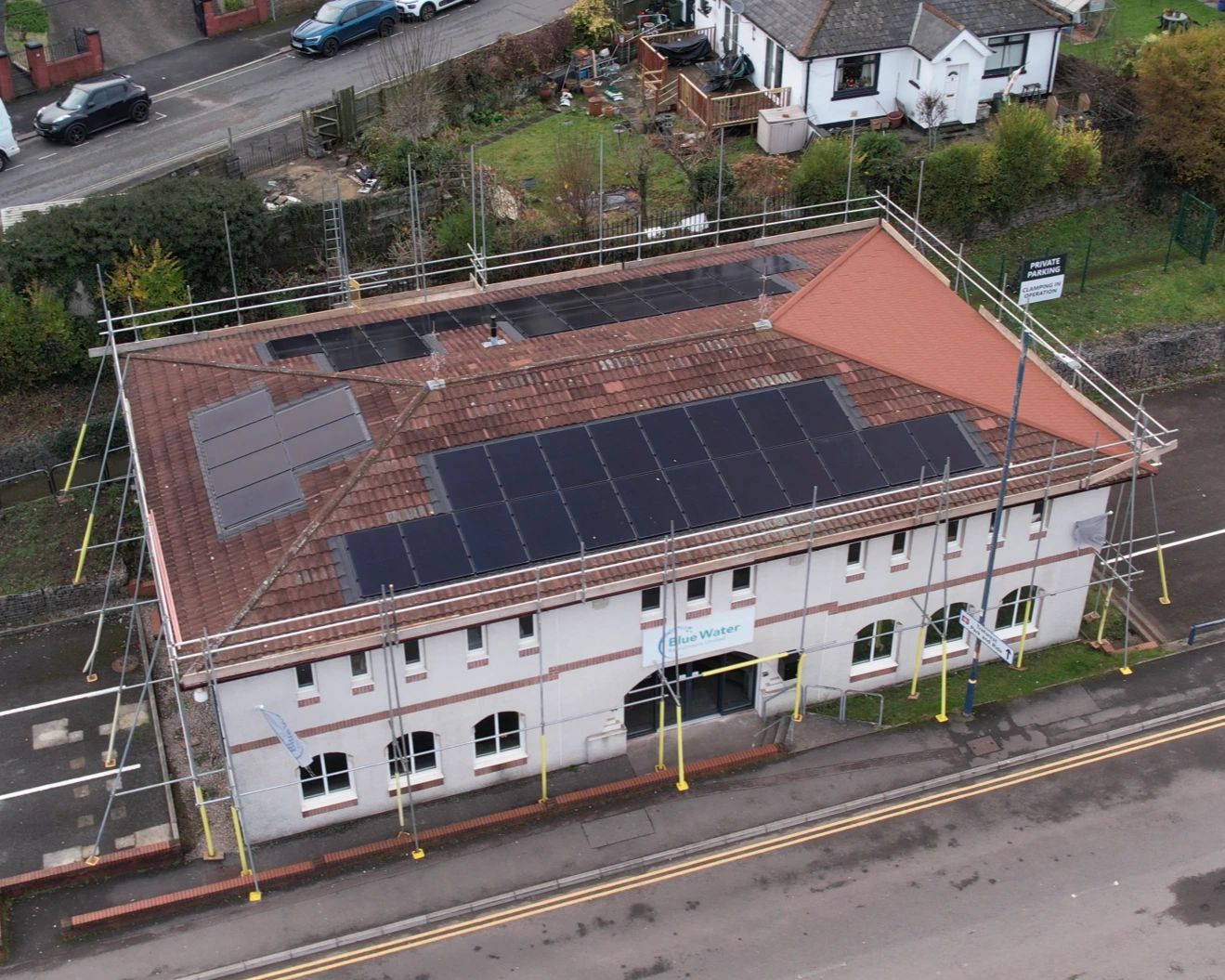
.webp) With the cables secured to the rails, solar panels are now ready to be clamped to the rails on the roof of Vision Court in Cardiff.
With the cables secured to the rails, solar panels are now ready to be clamped to the rails on the roof of Vision Court in Cardiff.
How Solar Panels Are Fixed to a Tiled Roof
Here’s a step-by-step overview of how solar panels are fixed to a tiled roof, one of the most common roof types in the UK:
1. Locating the Rafters and Securing Roof Hooks
To begin, a few roof tiles are lifted to locate the rafters beneath. Once identified, these can be measured in order to determine suitable solar panel mounting positions. Roof hooks are then fixed to the rafters, providing a secure structural fixing point.
2. Installing the Rails
Mounting rails are fastened to the roof hooks using a nut and bolt system. This means the rails can be securely fixed while allowing for adjustments to ensure accurate alignment.
3. Refitting the Tiles
The removed tiles are then refitted to maintain the roof’s weatherproofing. Where necessary, a small notch is ground into the tiles so they sit correctly over the brackets. This process does not affect the roof’s overall strength or performance.
4. Clamping the Panels into Place
The solar panels are mounted on the rails and secured with clamps. Cabling is attached to the rails to keep it clear of the brackets, before finishing touches are added, such as rail end caps and bird protection where needed.
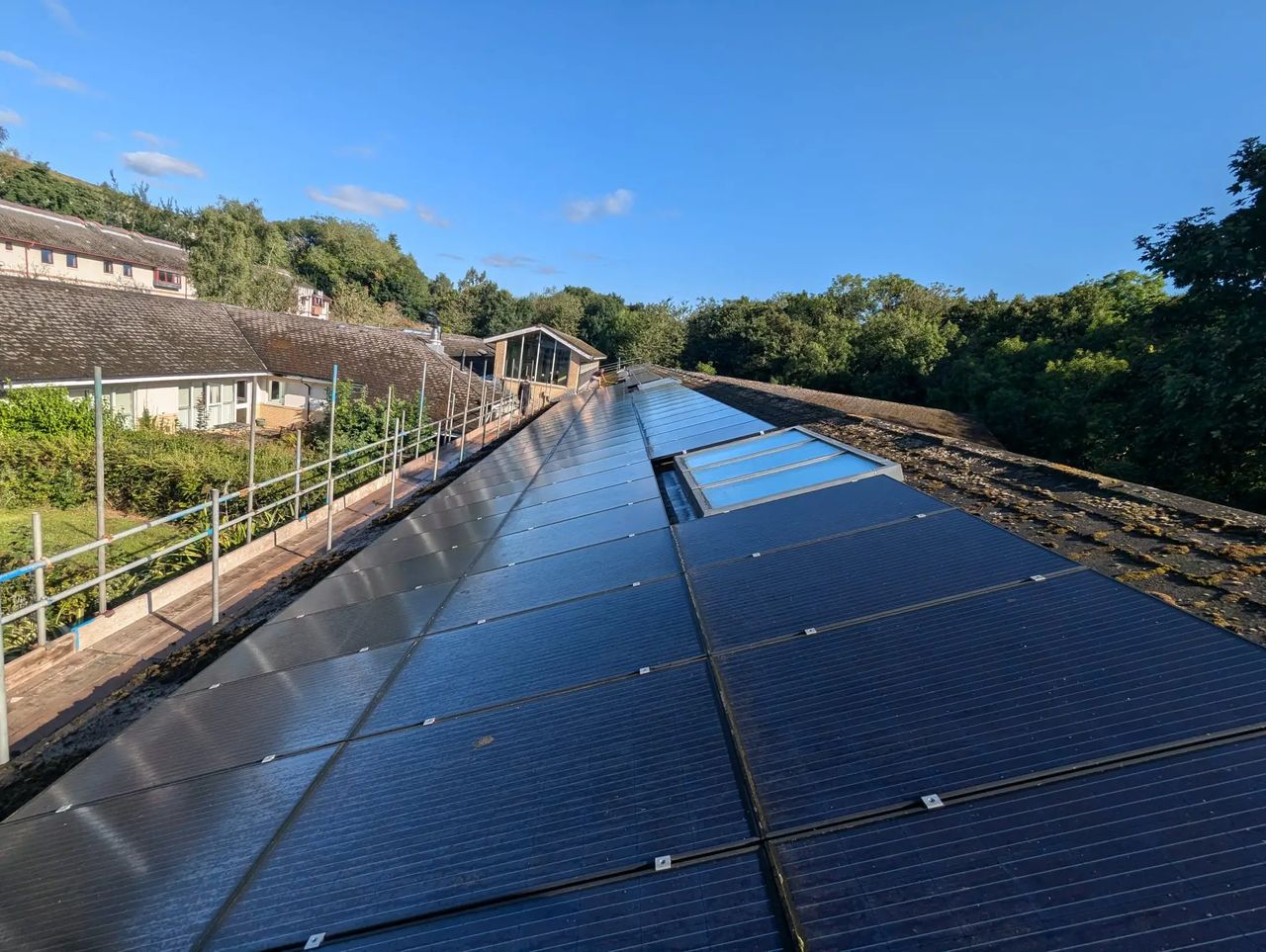 Solar panels fitted across the tiled roof of NHS County Hospital, worked around the building's existing rooflights.
Can Solar Panels Replace Roof Tiles?
Solar panels can replace roof tiles when using an integrated solar systems, where panels are built into the roof structure rather than mounted on top. This type of system is common for re-roofing or new-build projects, and can reduce the amount of roofing materials needed.
Integrated solar panels perform a dual function, generating electricity while also providing weatherproof protection for your roof. As the panels sit flush with the roofline, they offer a more seamless, aesthetic finish than traditional on-roof systems.
However, integrated solar panels have a lower efficiency of around 5-10% compared to traditional on-roof systems. Reduced airflow behind the panels can cause them to run hotter, potentially reducing efficiency.
If you’re considering re-roofing or a new build and want to include solar, our integrated solar re-roofing service lets you save on roofing materials while generating renewable energy for your business or home. Speak to our team to get started.
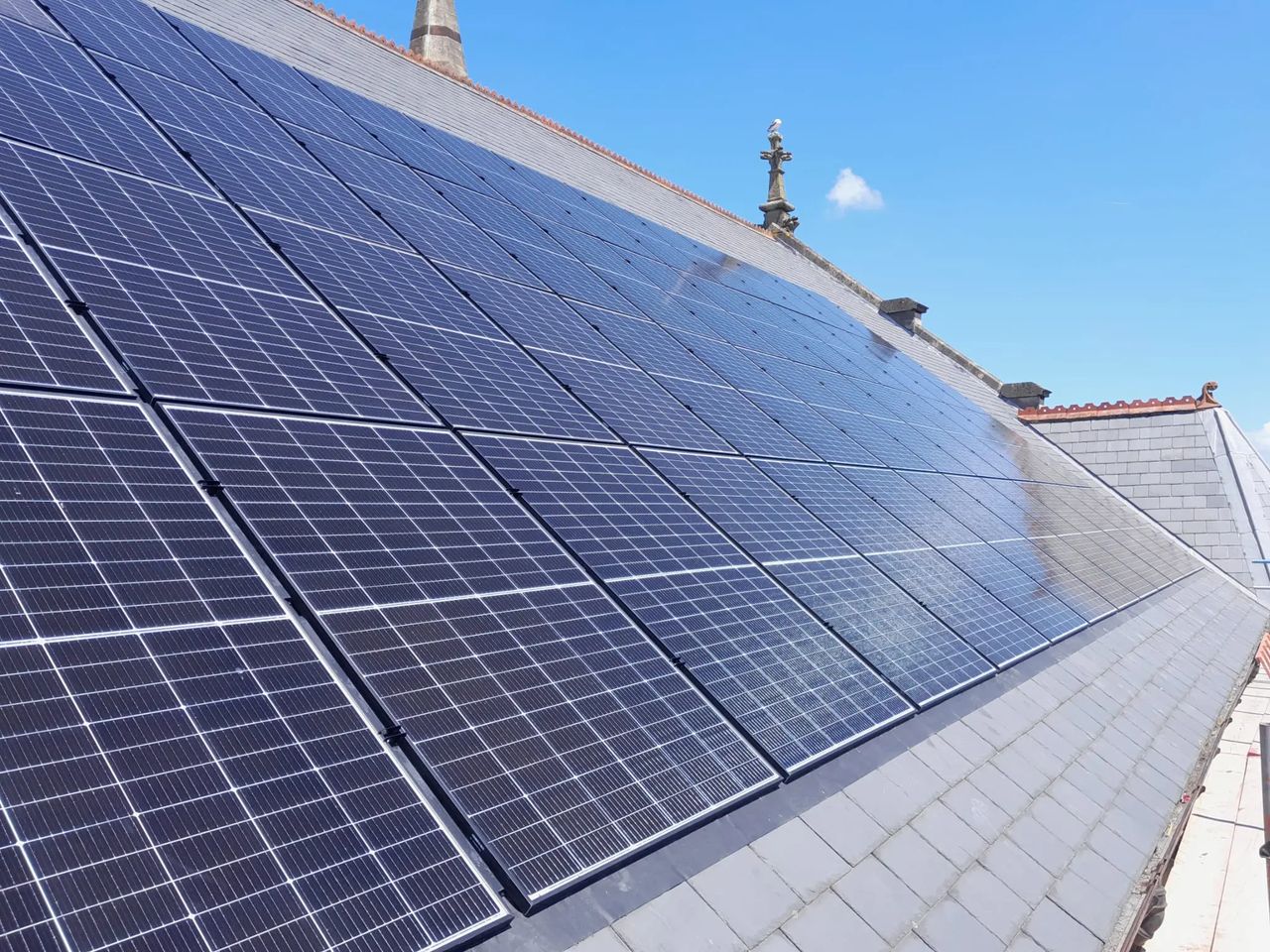 Integrated solar means you an replace roof tiles with solar panels. These are build into your roof, like at The Gate Arts Centre in Cardiff.
How Solar Panels Are Fixed to Different Roof Types
The way solar panels are fixed to a roof depends on the roof type and construction. Here’s an overview of how fixing methods differ across some of the most common roof types:
Fixing Solar Panels to a Slate Roof
Around 30% of UK homes have slate roofs, which need additional care during installation. While slate tiles are a durable and premium roofing material, they are more brittle than concrete tiles. A common approach is to remove the surrounding slates, install the roof brackets, and then refit the slates once the fixings are in place.
As slate tiles are fragile, it’s normal for a small number of tiles to be replaced during the installation process.
Fixing Solar Panels to a Corrugated Metal Roof
Corrugated metal roofs are common on agricultural and industrial buildings, and are often simpler to work with. Solar panels can be fixed directly into metal sheets or supporting purlins, with rubber seals used around the fixings to maintain weatherproofing and prevent leaks.
Fixing Solar Panels to a Flat Roof
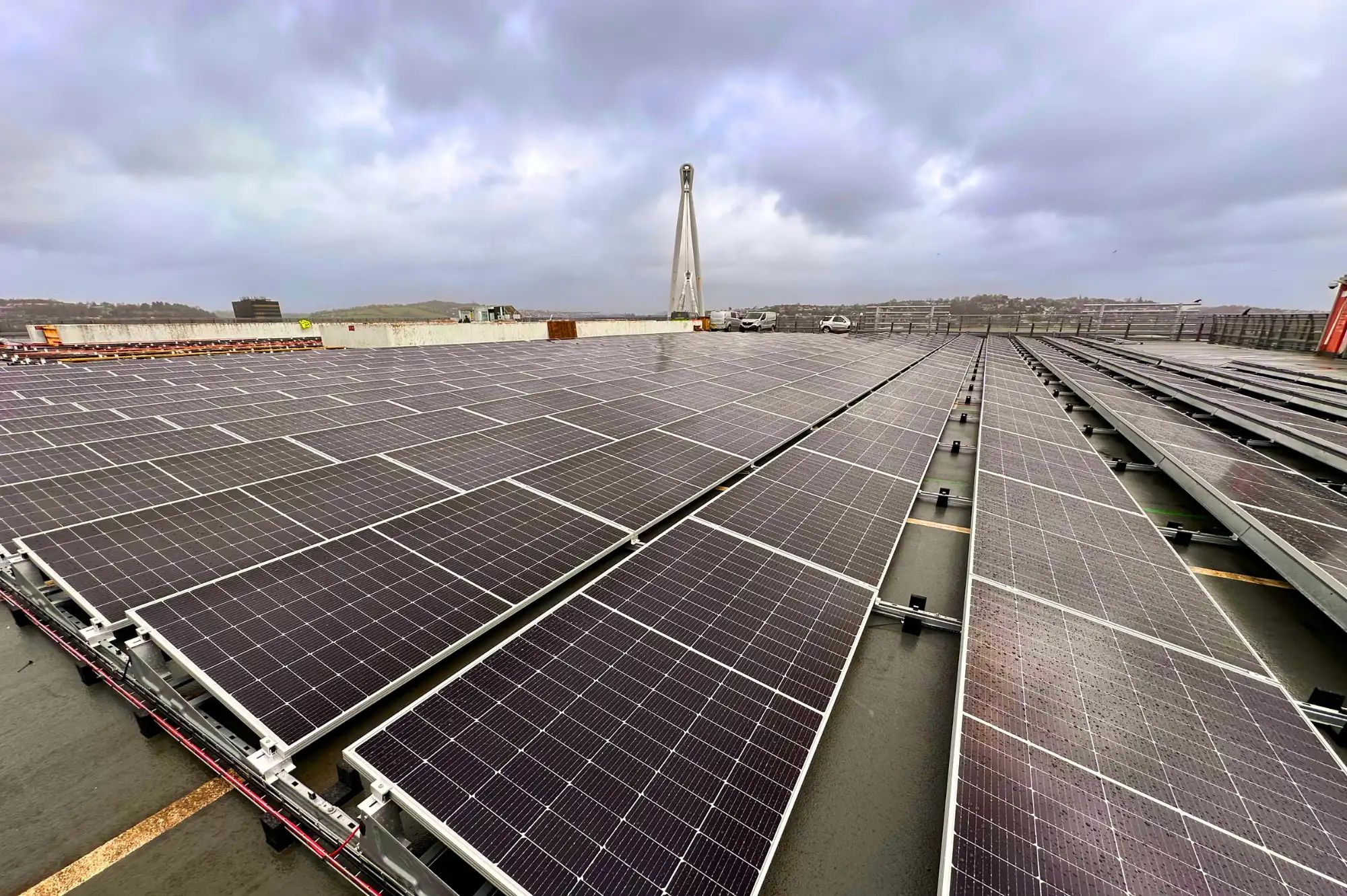
Solar panels can be installed on flat roofs without penetrating the roof covering. Instead, ballasted mounting systems are used to hold the panels in place, tilting them at an optimal angle to maximise sunlight exposure and reduce shading.
With flat roofs, calculating structural load is particularly important. The roof needs to support not only the panels but also the weight of the ballast. In some cases, planning permission may also be required, depending on the height and angle of your system.
How We Can Help
We hope this guide has helped you understand how solar panels are fixed to a roof, and how fixing systems can be adapted to keep your roof secure and weatherproof – whether it’s tile, slate, corrugated or flat.
If you’re considering installing solar panels on your roof, or want advice tailored to your roof type, we can help. Learn more about solar panel installation and integrated solar by contacting our team with any questions or to get started on your renewable energy project.

.webp)