Commercial solar rarely demands attention, which is exactly why problems go unnoticed. A system that has lost a string, or is running an inverter that has been throwing faults for 6 months, will keep generating. It will just generate less. And that is a problem.
This is a practical guide to what commercial solar maintenance actually involves, how often a system should be checked, what it costs and what to do if the company that installed your system is no longer around.
For what happens across the full 25-year life of a system, including output degradation and end-of-life options, we have covered that separately in Commercial Solar Over 25 Years.
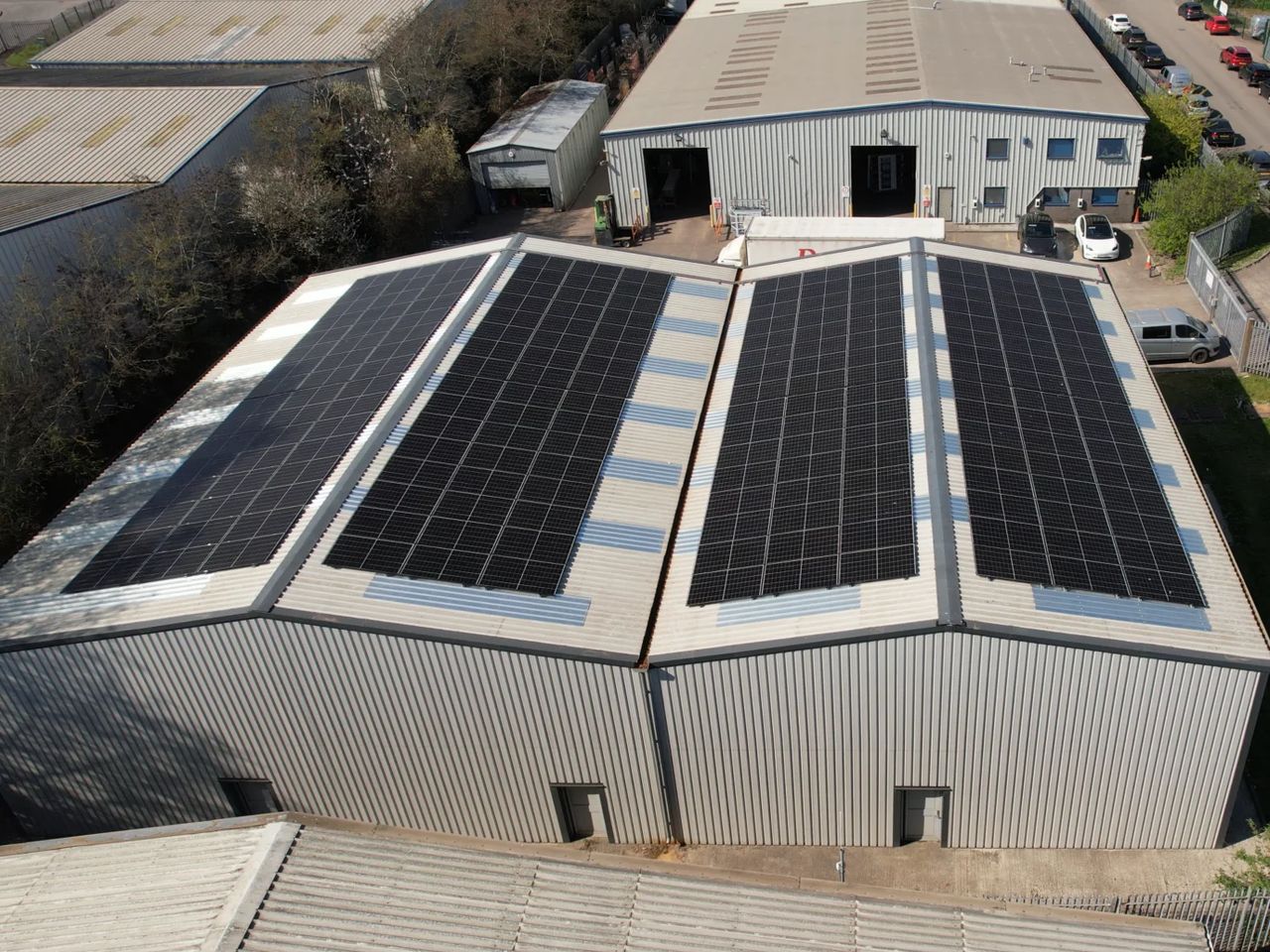
What actually goes wrong
Panels are sometimes the problem, and not only on older systems. More often though, the issues that cost businesses real generation sit somewhere else in the array.
Failed modules. Panels do fail, and not only on old systems. We have seen broken modules on arrays only five years into their life. The important part is that a failed module is often a symptom rather than the cause. Something has made that panel run hot, and unless the underlying issue is found, the replacement will go the same way. This is where thermal imaging earns its place, because it shows you the pattern rather than the single failure.
On genuinely old systems there is a second complication. Panels from ten or fifteen years ago are often no longer manufactured, so a like-for-like swap is not always possible and the fix becomes a question of matching a current panel to the existing string electrically rather than physically.
Inverter faults. The inverter is the busiest component in the array and the one most likely to need attention. Faults range from a temporary trip that clears itself to a unit that has shut down and stayed down. Many businesses find out months later.
A string that has dropped out. On larger commercial arrays the panels are wired into strings. If one string goes offline through a failed connector, a tripped isolator or water ingress, the system carries on running on the rest. Output falls by a chunk, but nothing looks broken from the ground.
DC connectors and cabling. Poorly seated connectors and cable left resting on a roof surface are two of the more common findings on older systems. Both are cheap to fix when caught early.
Bird nesting. Pigeons under a pitched array are a persistent problem on commercial roofs. Nesting material blocks airflow under the panels, holds moisture against the roof covering, and can damage cabling. Mesh proofing solves it permanently.
New shading. Sites change. A new extension, a delivery bay canopy, a neighbouring unit or plant equipment installed on the roof can put a shadow across an array that was designed without one.
Monitoring gone quiet. The most common fault of all, and the one that hides every other fault on this list. A router change, a new site firewall or a swapped SIM will knock a monitoring connection offline, and once the data stops, so does anyone's ability to notice a problem.
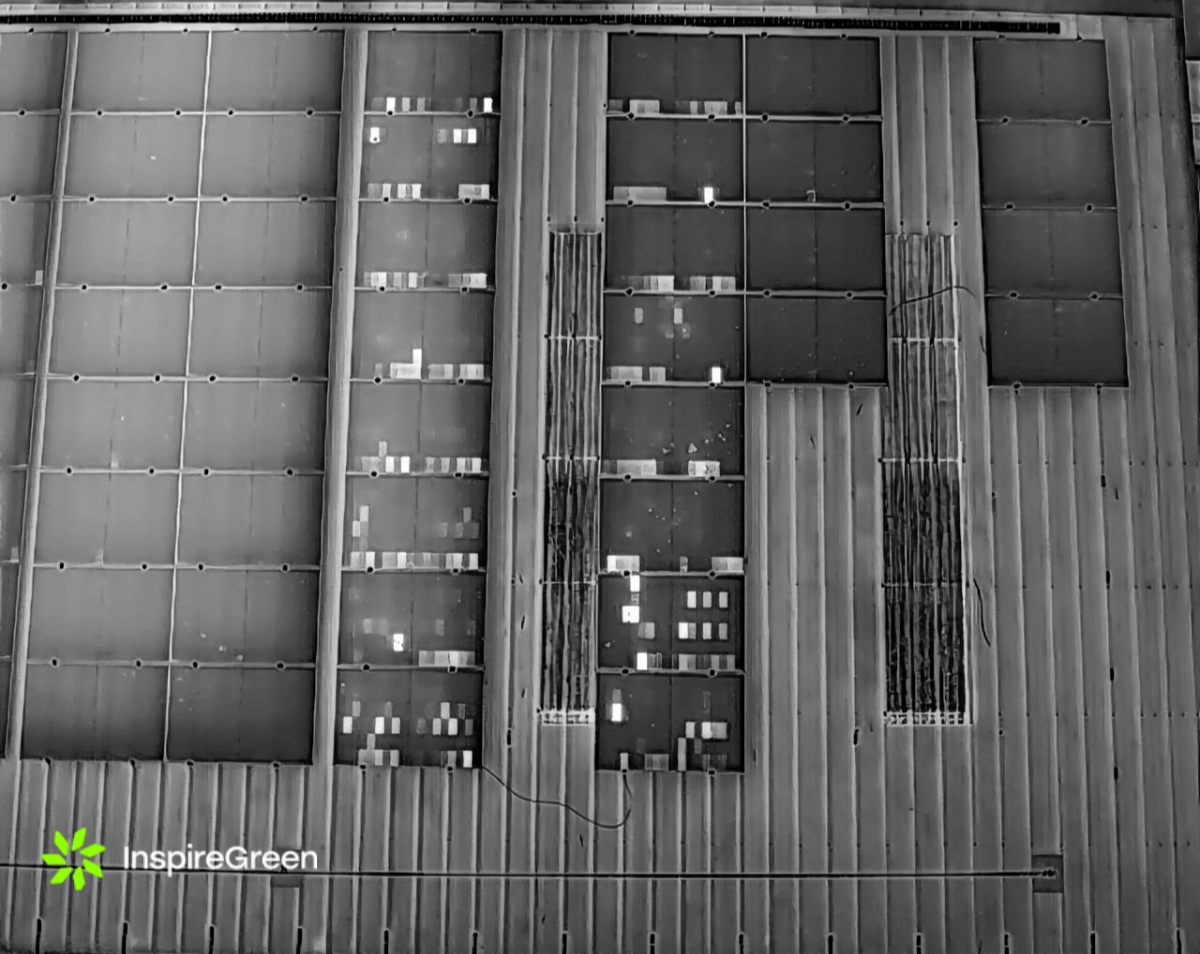 The owner had no idea anything was wrong. The bright cells are running hot, picked up on a thermal drone survey, invisible from ground level and nothing on the monitoring portal suggested a problem.
Thermal survey by Inspire Green. Third-party installation.
How you find out: monitoring is the whole game
Every modern commercial system reports its output somewhere. The difference between a system that gets looked after and one that quietly under-performs is not whether the data exists, it is what the data gets compared against.
The point of monitoring is not to watch a number go up. It is to compare what the system actually produced against what it should have produced for that site, that time of year and that weather. A 10% shortfall is invisible if you are just looking at a dashboard showing generation. It is obvious the moment you compare it against an expected figure.
The level of detail depends on how the system was built, and it varies more than people expect. Optimisers are an optional extra rather than a given. A SolarEdge system has them on every panel by design, so a single shaded, damaged or fouled module shows up in minutes. A standard string inverter without optimisers reports on the string as a whole and tells you nothing about the individual panels within it.
That distinction matters when something goes wrong. Panels in a string are wired in series, so the current through the whole string is limited by its weakest module. A single bad panel pulls down every panel on that string, not just the ones next to it. On a system with module-level data you can see which panel it is from a desk. Without it, someone is going up on the roof to find out.
There is a financial reason to care about small shortfalls specifically on commercial sites. Most of what a commercial array produces is used on site rather than exported, and a unit used on site is worth what you would otherwise pay for it from the grid. Lost generation costs you at the import rate, not the export rate. We covered why in Solar self-consumption: why using power beats generating it.
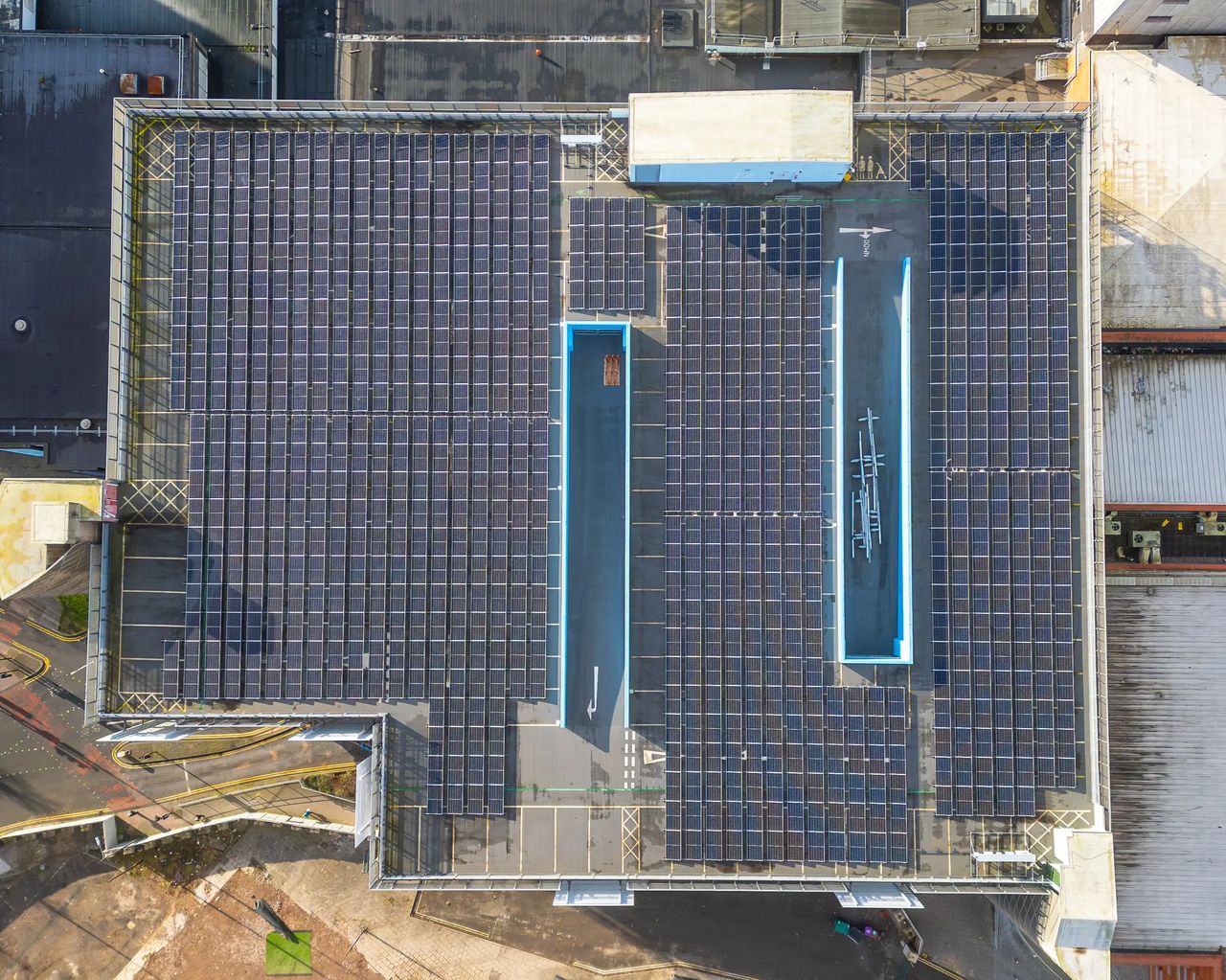
What a commercial solar service visit includes
A proper service is more than a look and a clean. The scope should cover:
Panels. Visual inspection for cracked glass, delamination, discolouration, backsheet damage and water ingress at the junction box.
Fixings and mounting. Clamps, rails, roof hooks, seals at penetration points, and ballast position on flat roof systems. Fixings loosen over years of thermal movement and wind loading.
DC side. Cable condition and UV degradation, connector integrity, cable management, isolator function.
AC side. Isolators, metering, containment, labelling.
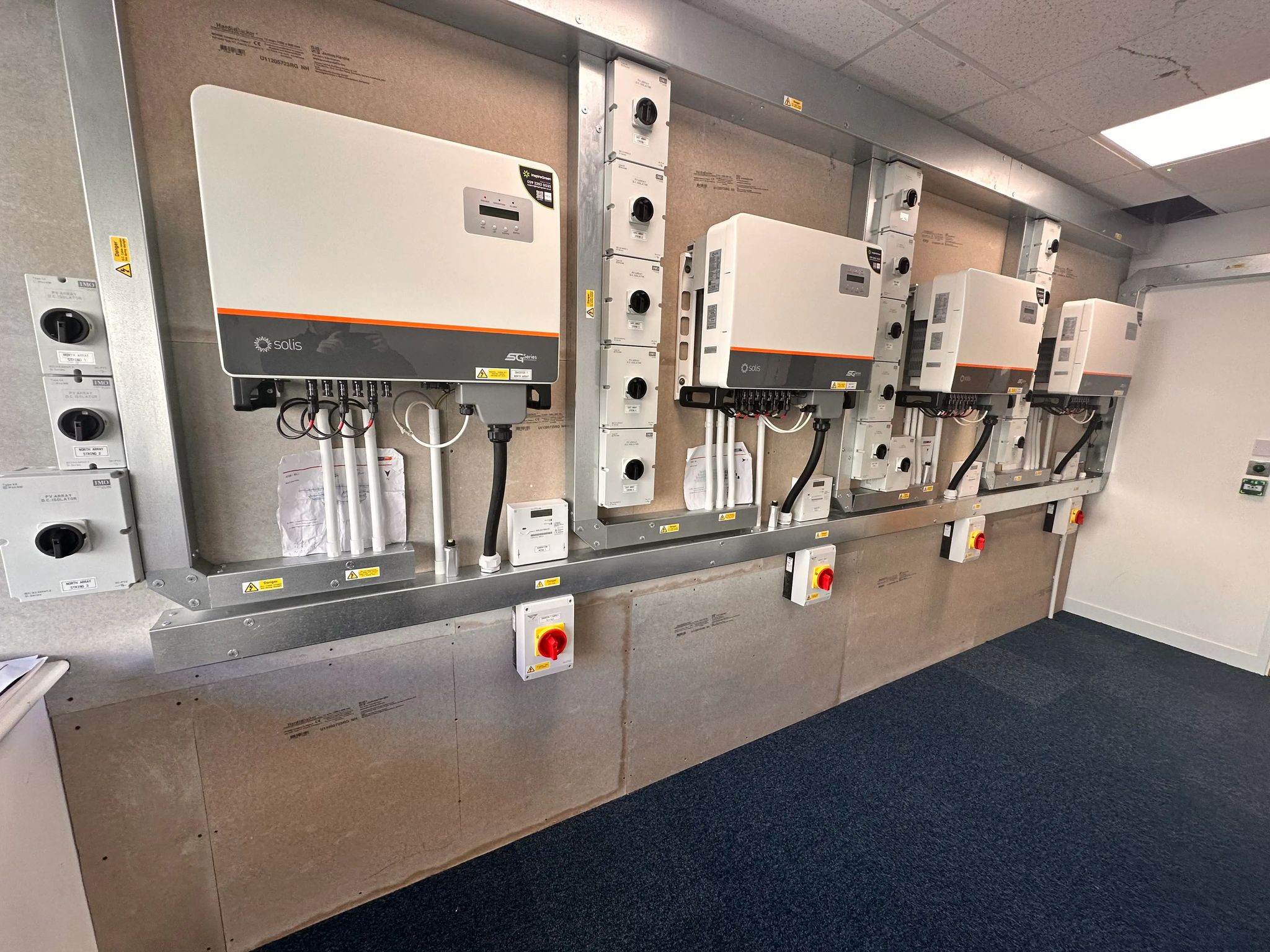
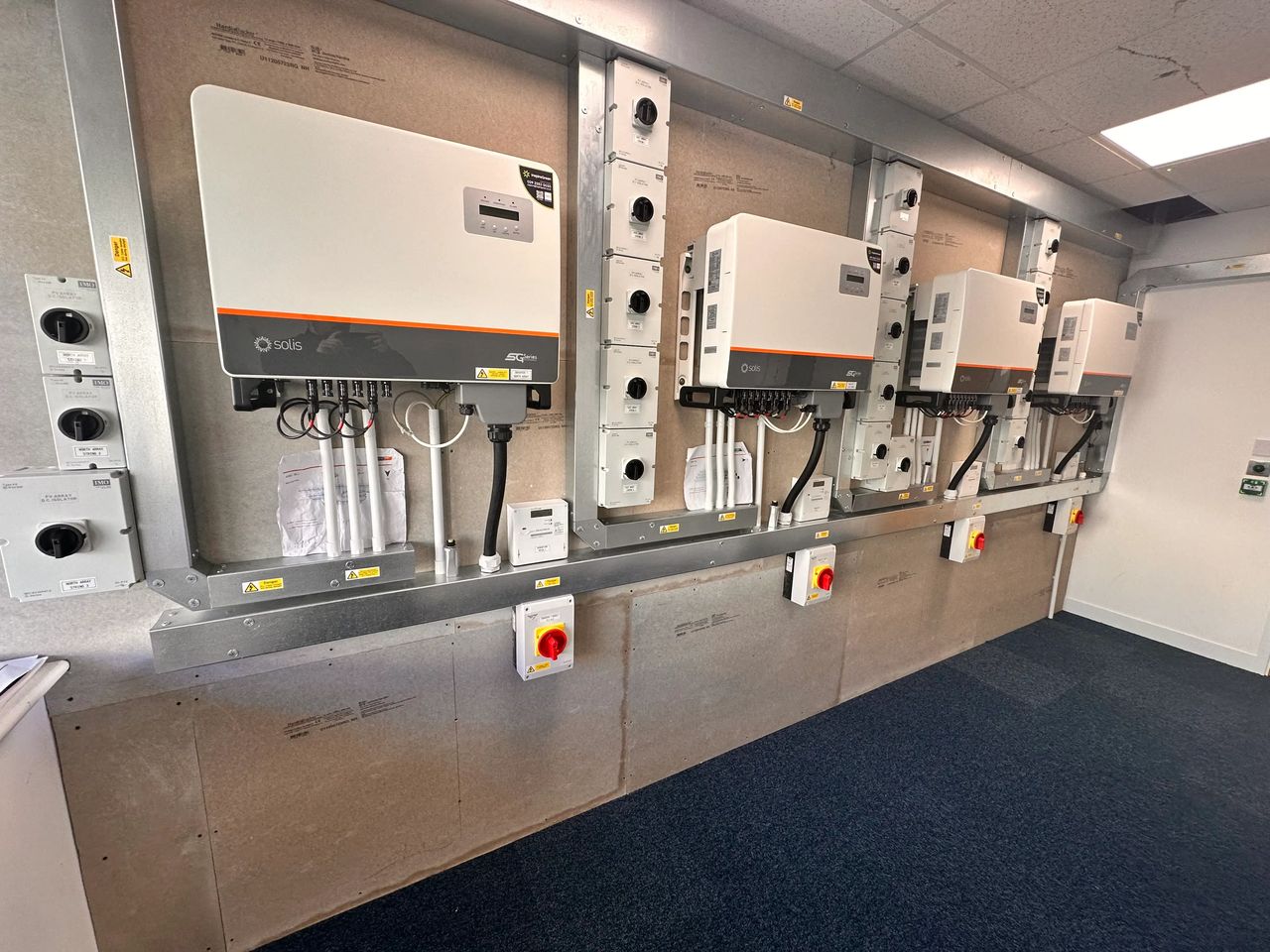
Inverters. Fault and event logs, cooling and ventilation, filters where fitted, firmware, and physical condition.
Earthing and surge protection. Continuity checks and inspection of surge protection devices, which do their job by sacrificing themselves and then need replacing.
Thermal imaging. Infrared inspection identifies hot spots, failed cells and bad connections that are invisible to the eye. On large arrays this is far quicker than a panel-by-panel check.
Performance review. Actual output against expected output for the period since the last visit, with any shortfall investigated rather than noted.
Documentation. A written report with findings, photographs and recommendations. This is the part people undervalue, and the part that matters most later.
Does commercial solar need cleaning?
Yes, though less often than cleaning companies suggest, and the decision should come from your monitoring rather than a calendar.
The self-cleaning idea comes from residential solar, where a steep roof pitch means rain runs off and takes loose dirt with it. Commercial roofs are usually much shallower. Water sits and dries in place instead of running off, and what it leaves behind is a band of dirt along the bottom edge of every panel. It builds rather than washes away, so the loss creeps up year on year until someone deals with it.
Then there is the dirt rain was never going to move at any pitch. Bird fouling, lichen and moss, agricultural film and industrial fallout all sit on the glass until someone removes them.
How much this costs you varies enormously by site. Soiling losses across global PV are typically put at around 3 to 5% of annual output. A clean site with a reasonable pitch sits below that. A unit next to farmland, a quarry, a coast road or an active construction site sits well above it.
Which is why monitoring should make the call. If output is tracking expectation, a clean buys you very little. If output has drifted down and there is no fault behind it, soiling is usually the answer, and the gain shows up in the data within days.
When a clean is warranted it needs deionised water and proper access equipment. Detergents leave a residue that attracts more dirt, and pressure washing risks forcing water past the panel seals.
What does commercial solar maintenance cost?
Cost is driven by four things, not by system size alone:
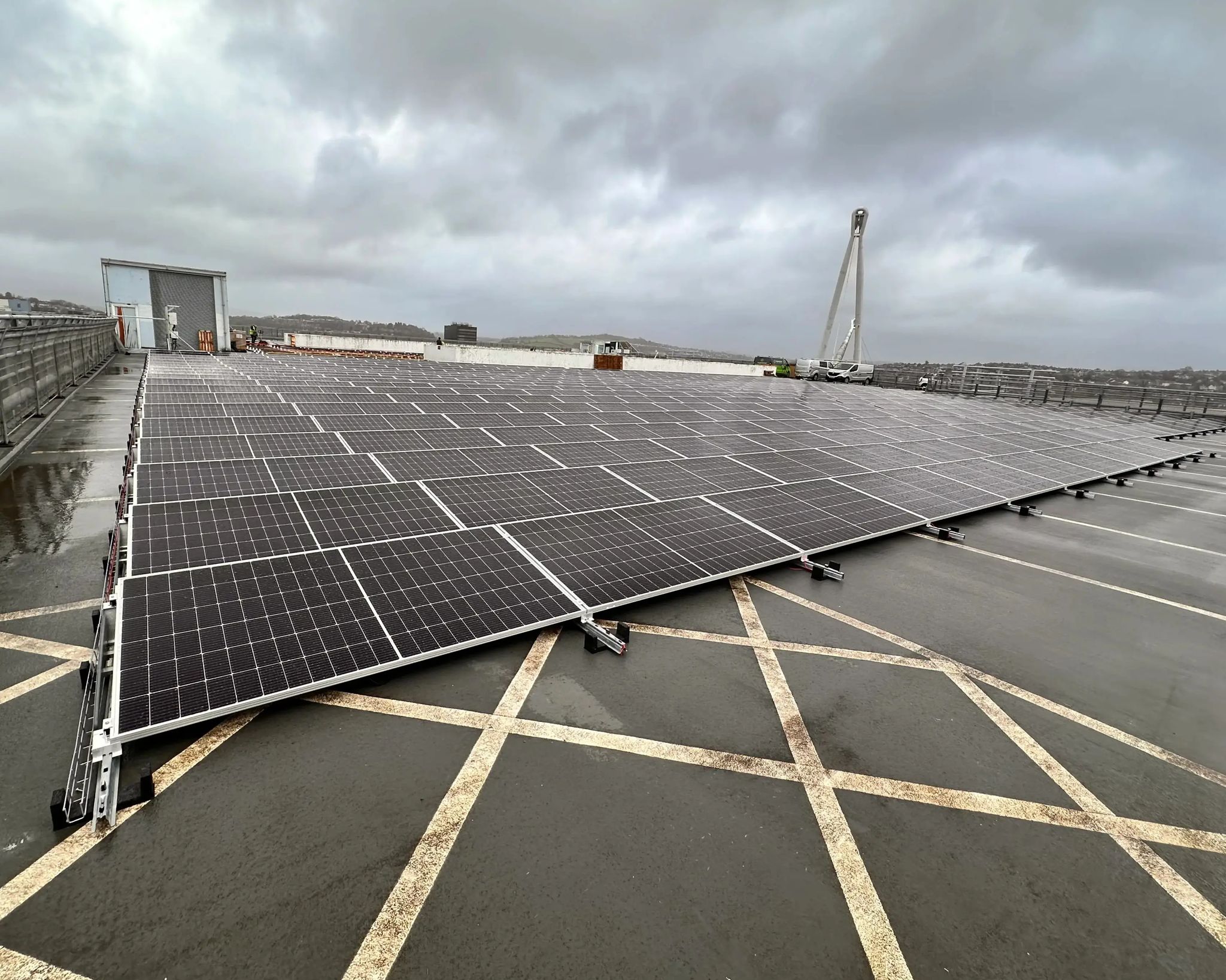
Access. Roof height, safety requirements and whether the work needs scaffold, a MEWP or rope access. On many sites this is the single biggest line.
System size and layout. Number of inverters, number of strings, and how spread out the array is.
Scope. A monitoring and call-out arrangement costs less than a full annual inspection with thermal imaging and electrical testing.
Response time. Guaranteed attendance windows cost more than best-endeavours support.
Set that against what a fault costs. A system that loses a fifth of its output for six months without anyone noticing will usually cost more in bought-in electricity over that period than several years of servicing.
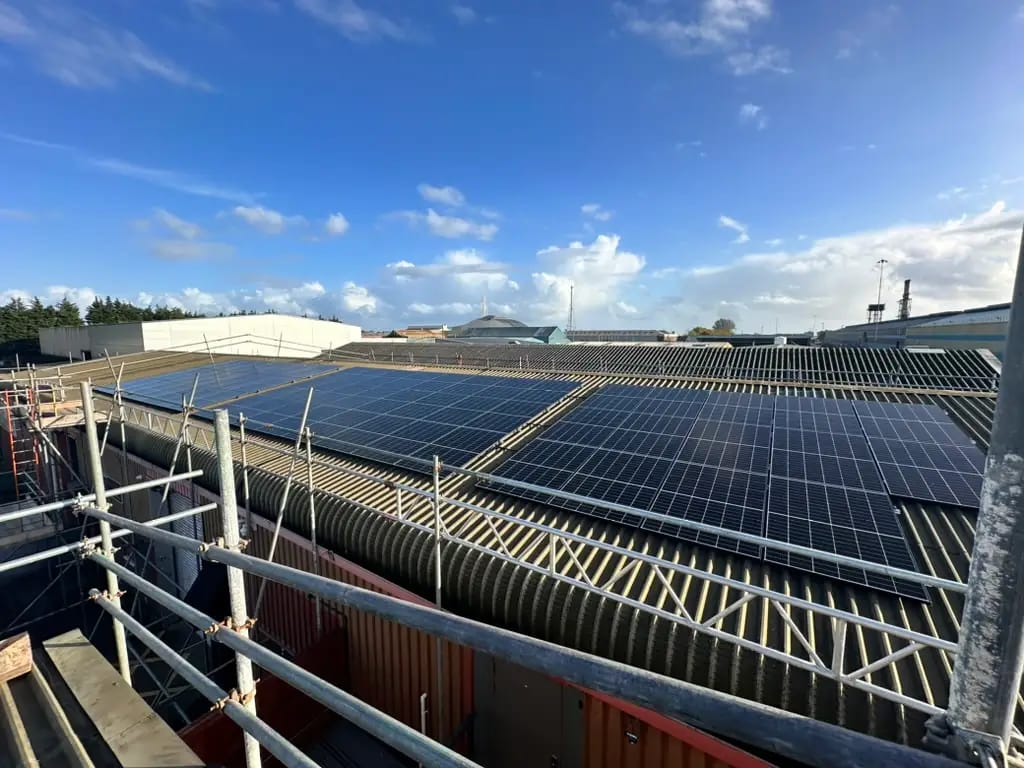
Warranty and insurance: what the paperwork is actually for
Maintenance records feel like admin until the day you need them. Then they are the difference between a claim that gets paid and a conversation you lose.
Warranties are conditional
A panel warranty is not a promise that the manufacturer will replace anything that fails. It usually comes in two parts: a product warranty covering defects in materials and workmanship, and a separate performance warranty covering how much output the panel should still be producing years in. Inverters run on their own terms again, often shorter, sometimes extendable at extra cost.
All of them are conditional on the system having been installed correctly and reasonably looked after. When a claim is made, the manufacturer will want to know which module failed, when, and what it was producing beforehand. Monitoring data and dated inspection reports answer that in an afternoon. Without them the claim becomes an argument you are unlikely to win.
Worth checking your own terms rather than assuming, because they vary by manufacturer more than most people expect.
What insurers actually ask for
There is no single rulebook. RC62, the joint code of practice for fire safety with PV panel installations, is the document most UK insurers start from, but several publish their own standards alongside it. Aviva, Zurich, AXA and FM all have their own PV guidance, and what they ask for varies enough that the only reliable answer is to ask yours directly.
They do broadly agree on the basics. The installing contractor should be properly qualified, which under RC62 means MCS certification in PV systems, ISO 9001, SSIP registration through a scheme such as CHAS or Acclaim, appropriate DC and low voltage AC competence, and suitable insurance including professional indemnity. There should be a fire risk assessment carried out by a competent person. And there should be safe, reliable roof access, not just for the original install but for inspection, maintenance, cleaning and, in the worst case, firefighting.
What documents to keep
Whatever your policy and warranty terms say, you should always make sure you have the below documents easily accessible. The company providing maintenance on your solar system may require them, as well as your insurance company.
The original handover pack and MCS certificate
The electrical installation certificate
String and layout drawings
Inverter and panel model and serial details
Dated service and inspection reports, with photographs
Thermal survey reports where they have been done
Monitoring records, or at least annual output figures
Any cleaning or remedial work carried out
What if the company who installed your system is no longer trading?
This is very common. Since the solar boom, more and more installed who were active during the earlier solar boom are no longer in business, which can leave building with arrays on them and nobody to call.
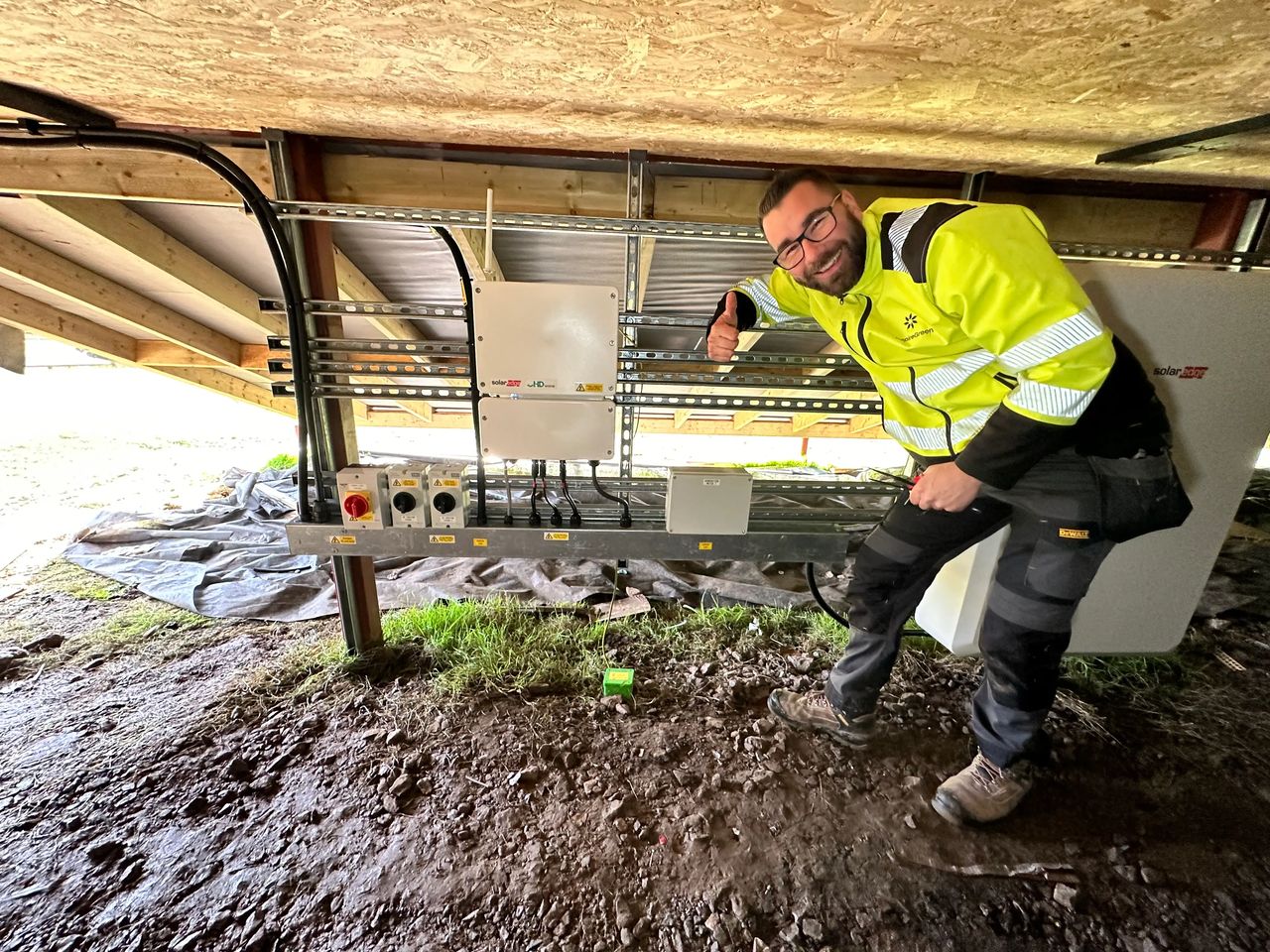
The system can be taken on by another installer, for example Inspire Green provides maintenance for install that we haven't done. The installer will ask for certain documents so they have an understanding of what has been installed and how before arriving to site.
What it comes down to
Maintenance on a commercial system is not complicated. It means someone inspecting the panels, fixings, cabling and inverters, thermal imaging where the array is big enough to warrant it, output checked against what the system should be producing, and a written report at the end of it. Most sites need that once a year. Sites with heavy soiling, persistent bird activity or a public building inspection regime may need it twice.
What it costs is driven more by getting safely onto the roof than by the size of the array, and set against a fault running unnoticed for six months it is rarely the expensive part.
The bit that catches people out is not the servicing. It is the gap between visits. A system will keep generating with a failed string, a dead module or an inverter throwing faults, and unless someone is reading the monitoring, the first sign of a problem is an electricity bill that has crept up for reasons nobody can explain.
If you have a system on your building and you are not sure how it is performing, or you have lost touch with whoever installed it, we can take a look. Book a free survey or call us on 02922 52 00 33.