Listed buildings are part of our national heritage, but they can come with high energy bills. If you’re based in one of the more than 30,000 listed buildings in Wales, or 379,000 in England, you may want to install solar panels to improve your organisation's sustainability and reduce long-term costs.
In this guide, we’ll break down what you need to consider before you put solar panels on a listed building, along with case studies of Grade I and II buildings that have done just that.
What Counts as a Listed Building?
When you think of listed buildings, castles and churches might come to mind. This designation can actually apply to all kinds of structures, from bridges to factories, garden walls and perhaps the building where you’re reading this now.
A building doesn’t need to be old to be listed, although it will need to be at least 30 years old to be considered. Instead, it’s the special architectural or historic interest of the building that matters more, and gives it legal protection.
If you want to put solar panels on a listed building, you’ll need to assess the impact the installation could have on your building, both visually and physically.
What Permission Is Needed for Solar Panels on a Listed Building?
To install solar panels on a listed building, you’ll need to get permission from your local planning authority. You’ll need to apply for:
Planning permission: Considering the wider impact of your development on the street, your neighbours and potentially a conservation area.
Listed building consent: Assessing the impact of a change on your listed building’s architectural or historic character.
As part of your application, you’ll need to share details on your solar panel installation, how they’ll work with your building’s structure and any changes to the building’s visual appearance.
While public bodies like Historic England are in favour of installing solar panels on listed buildings and produce guides to help you do this, gaining permission for your solar panels is essential. Failing to do so will mean breaking the law.
At InspireGreen, we can help you work with conservation officers to install solar PV systems that work for your listed building. Learn more about our solar installation solutions and design services by contacting us.
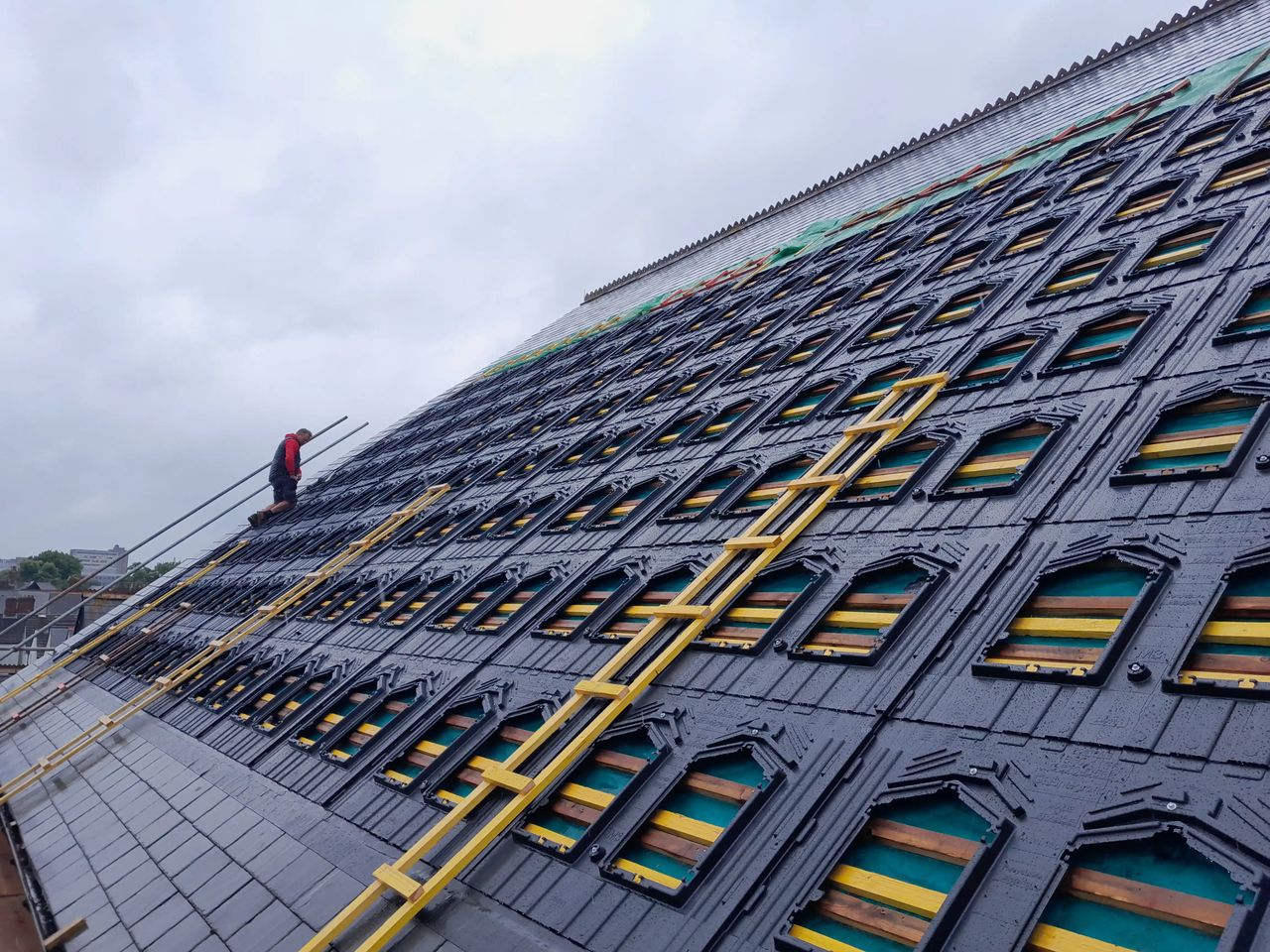 You'll need planning permission and listed building consent to put solar panels on most listed buildings.
Listed Churches
If you want to install solar panels on a church or place of worship, the permissions process is different. Some places of worship are eligible for ecclesiastical exemption. In these cases, you won’t need listed building consent, but will need permission from your denominational authority. You will still need planning permission.
How to Apply for Listed Building Consent
You can apply for listed building consent online with your local authority. Your installer can also do this for you.
You’ll need to provide:
Plans and drawings: Showing the impact of your solar panels
Heritage statement: Outlining the building’s historical or architectural significance
Heritage impact assessment: Explaining why the changes are necessary and how you will manage their impact
Design and access statement: Setting out your design approach and how the building will remain accessible and appropriate following the work
Gaining listed building consent takes around eight weeks on average, although it can be longer for significant alterations or Grade I or II* listed buildings. As part of this process, you or your installer may need to liaise with conservation officials.
Alternatives for Listed Buildings Where Rooftop Solar Isn’t Feasible
While rooftop solar panels and in-roof solar can be installed on listed buildings, they aren’t always possible. Your building’s appearance might be impacted too much by the panels, or your roof might have delicate tiles that could be damaged during installation.
The good news is that ground-mounted solar panels, or mounting panels on outbuildings, can be alternatives. For example, Bangor University chose ground-mounted solar panels, installed close to their Grade I listed building in 2018.
Case Study: In-Roof Solar for The Gate Arts Centre
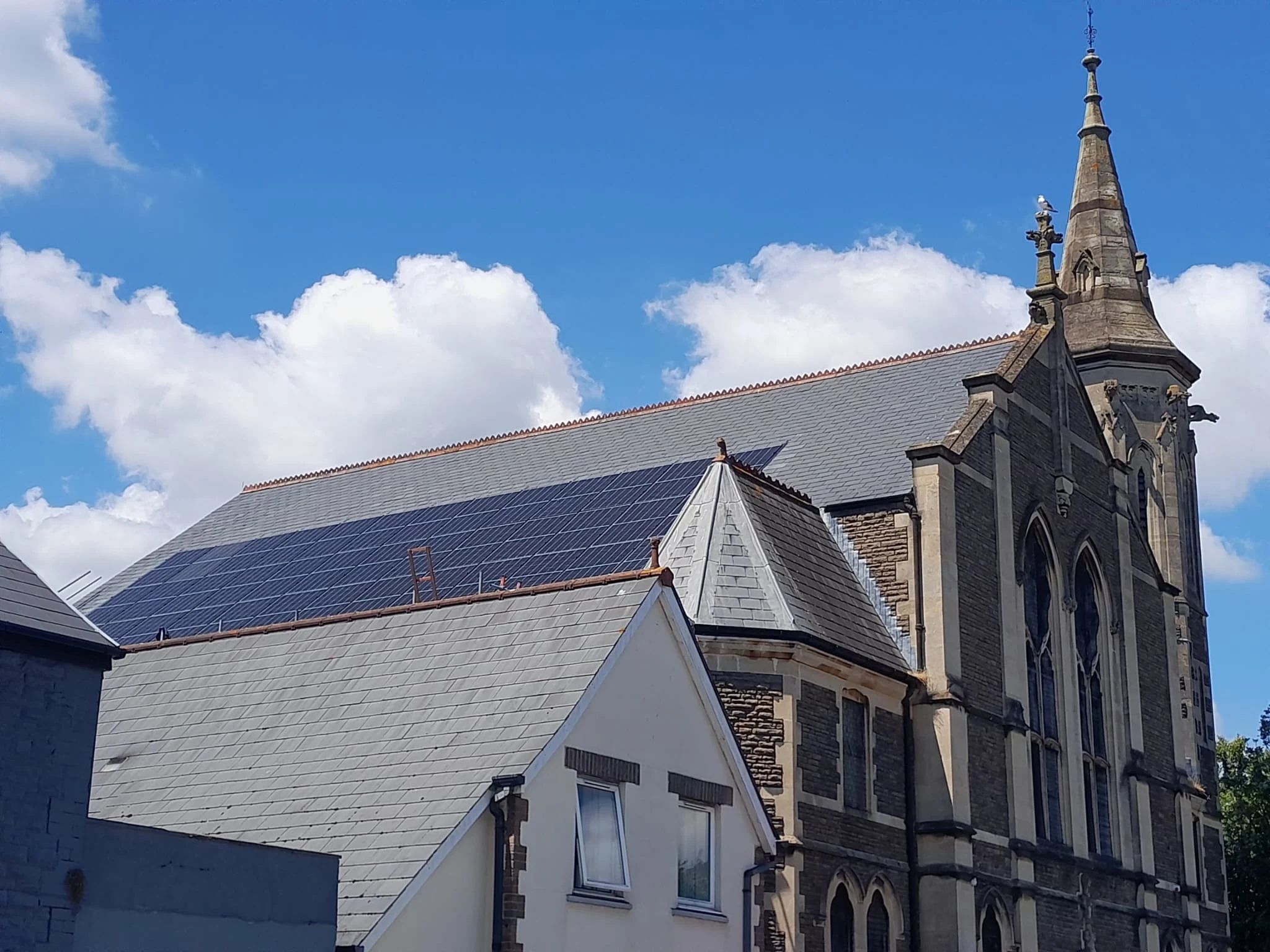
Lastly, here’s a case study of how solar panel installation worked for a Grade II listed former church. The Gate Arts Centre in Cardiff wanted solar power to support their community activities. While they’d originally gained planning permission for on-roof solar panels, this threatened to add additional weight to the structure.
Together with architects, engineers and local conservation officials, we were able to revise the original design and opt for a lighter in-roof mounting system. This provides The Gate Arts Centre with 24,290kWh of power each year, 4.7 tons of saved carbon emissions, and an estimated payback of 4.9 years.
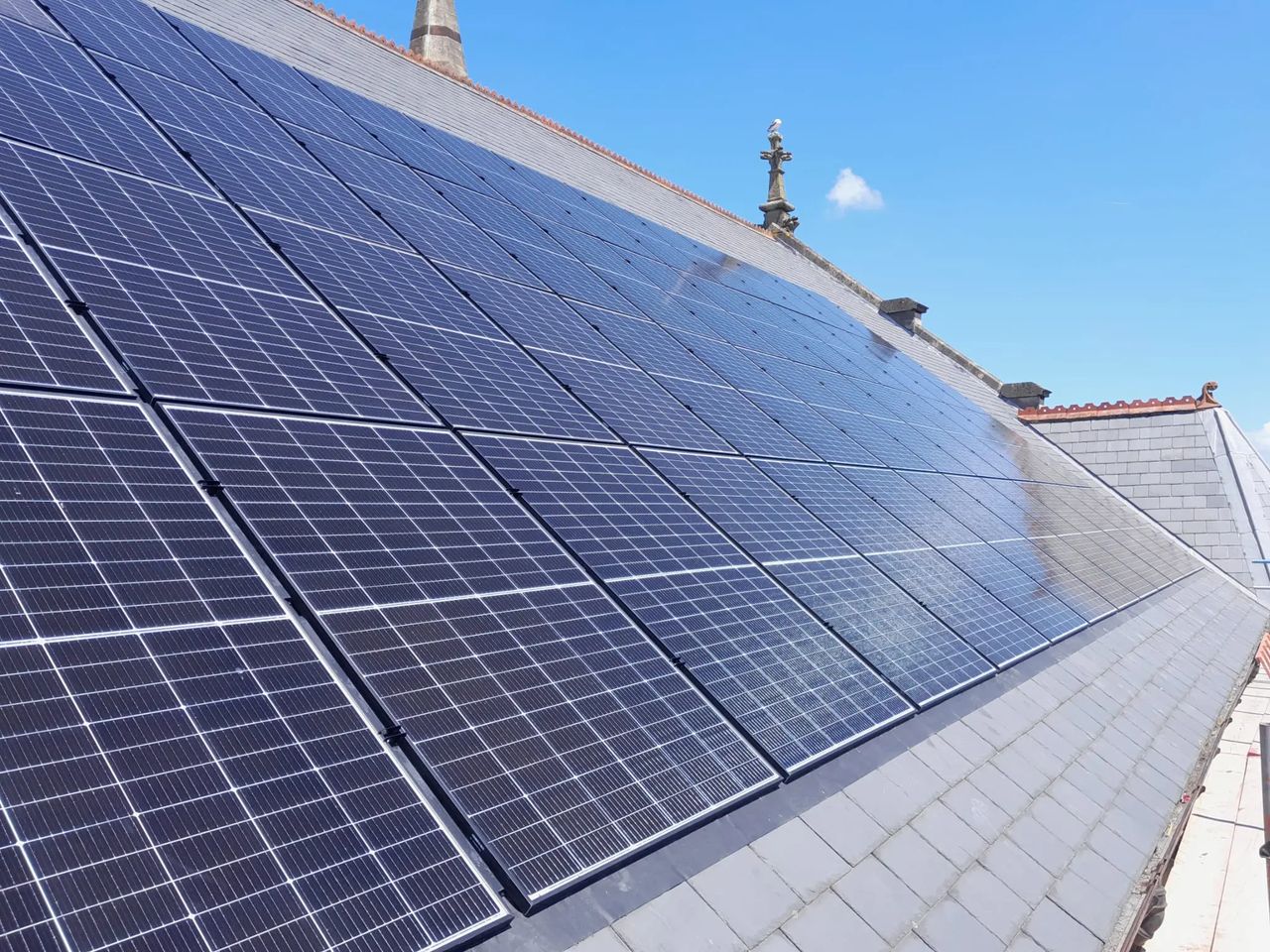 We installed in-roof panels on The Gate Arts Centre roof to provide solar power with minimal weight.
How We Can Help
We hope this guide has helped you understand how putting solar panels on a listed building is possible, as long as you assess your impact, plan to protect your building’s character and gain the relevant permissions.
For the UK to reach net-zero by 2050, more of our listed buildings will need to be powered by renewable energy and retrofitted for energy efficiency.
If you want to generate solar energy for your listed building, you can find out more about our solar installation solutions, design services and compliance expertise by contacting us with any questions you have or to start your renewable energy project.

.webp)