
If you live in the UK, there’s a good chance your roof is suitable for solar panels. However, not all roofs perform the same. Factors such as your roof’s positioning, condition, angle, and material all play a role in how efficiently solar panels generate electricity and how safe the installation will be.
In this guide, we’ll explain how to determine whether your roof is suitable for solar panels and outline key considerations before installing a solar energy system for your business or home.
Can Solar Panels Be Fitted on Any Roof?
With 1.73 million solar panel installations across the UK in 2025, the good news is that most roof types can support solar panels. The way solar panels are fixed to your roof will depend on the materials and structure. While not every roof is suitable, the majority of UK properties can accommodate a solar PV system with the right design.
Pitched roofs in good condition with minimal shading are generally ideal for solar panels. In the UK, 92% of homes have a pitched roof, making solar a practical option for many households.
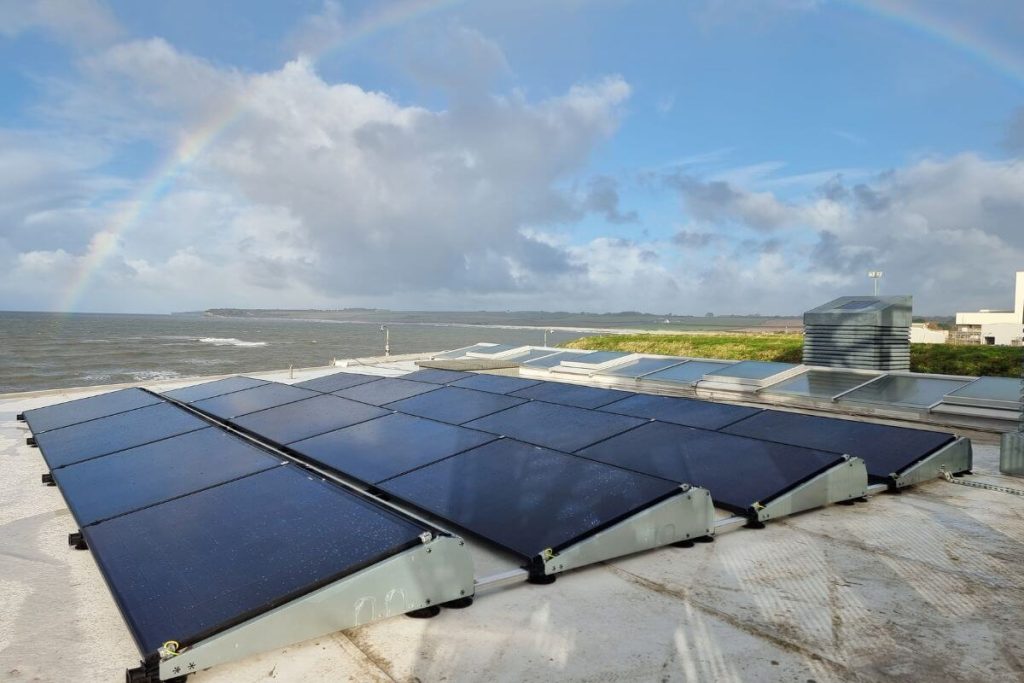
Flat roofs can also be suitable for solar panels. These systems typically use mounting frames and ballast weights to secure the panels without penetrating the roof surface. The main consideration is whether the roof structure can safely support the additional load, which your installers can assess for you.
Watch how we delivered an award-winning solar PV installation for Newport City Council on a flat underused car park roof here:
At InspireGreen we can design and install a solar PV system tailored to your business or home. Learn more about commercial solar installation and residential solar.
Is My Property Suitable for Solar Panels?
When assessing whether a property is suitable for solar panels, there are four key factors we will look at:
1. Roof Orientation and Pitch
In the UK, south-facing roofs typically deliver the best solar PV performance. That said, east and west-facing roofs are still well suited to solar panels and can generate significant amounts of electricity, eventually paying for themselves.
Solar panels are installed at an angle to maximise exposure to sunlight throughout the day. Pitched roofs naturally provide this angle, while flat roofs use mounting frames and ballast systems to achieve the optimal tilt.
2. Shading
Shading from trees, other buildings and roof features can reduce solar output. For trees, an easy fix might be to trim overhanging branches. Where shading can’t be avoided, technologies such as optimisers or microinverters can help to improve performance.
3. Roof Size and Usable Area
The amount of usable roof space affects how many solar panels can be installed and, in turn, how much electricity your system can generate. Features like chimneys, dormers, walkways, and skylights on your roof can limit the available mounting area for your panels.
4. Roof Condition
Solar panels typically last 25 years or more, and a standard residential system can weigh around 200kg, with larger commercial systems weighing more. For this reason, it’s important to ensure your roof is in good condition before installing solar panels.
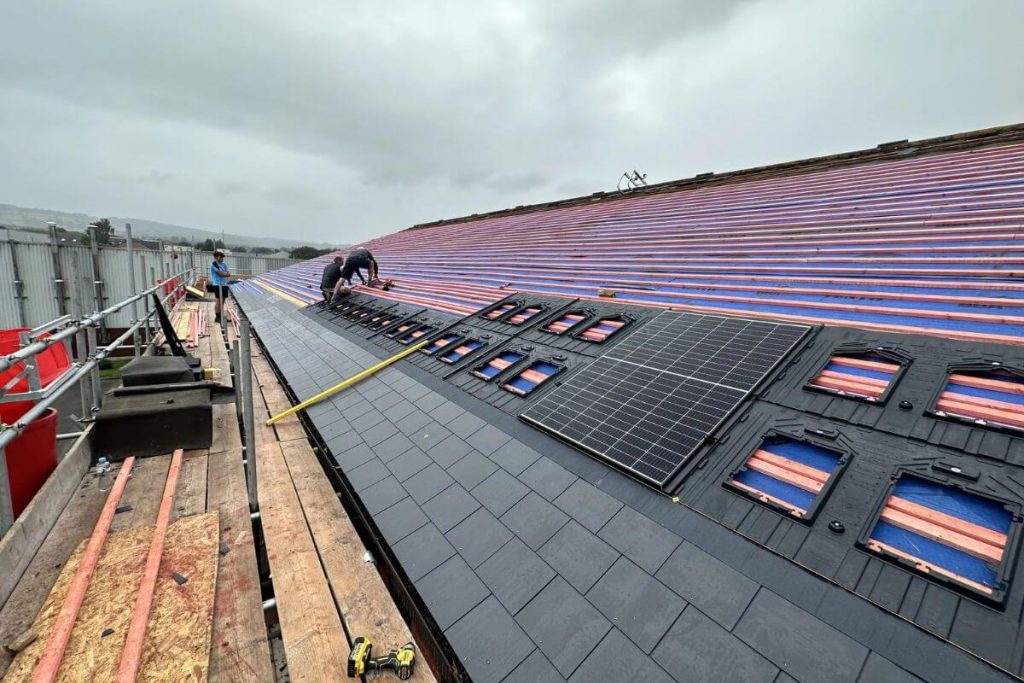
If your roof shows signs of wear, such as sagging, damaged tiles, or heavy moss growth, it’s worth reroofing before installing solar panels. You can even save on roofing materials by choosing integrated solar panels that sit flush with your roof.
What Roofs Are Not Suitable for Solar Panels?
While most roofs can accommodate solar panels, there are some situations where installation may not be suitable or may require alternative solutions. These include:
Incompatible Materials
Roofs made from materials such as thatch pose a fire risk and are not suitable for solar panels. Very heavy roofing materials, including Yorkshire stone or Cumbrian slate, can also limit the additional weight a roof can safely support.
Roofs in Poor Condition
If a roof is damaged or nearing the end of its lifespan, installing solar panels may be unsafe. In these cases, reroofing or choosing integrated solar panels can be a more practical solution.
Some Listed Buildings
While it is possible to gain listed building consent for solar panels, and we have successfully done so for a Grade II Listed building in Cardiff, local authorities may instead require panels to be installed on the ground or on an outbuilding.
Can My Roof Support Solar Panels?
Installing solar panels on your roof is a worthwhile investment that will pay you back over time. Understanding how factors such as roof orientation, condition, materials, and shading will impact your system’s performance will help you and your installer address any issues upfront.
If you want to confirm whether your roof can support solar panels, we can assess your roof, energy usage and goals to design a solar PV system that’s optimised for your energy needs. Explore our commercial solar installation and residential solar services, and contact us when you’re ready to get started.


