
Thinking about going solar? One of the first questions most homeowners ask is, “When will my solar panels start saving me money?”
This moment is known as the solar payback period, also known as the point where your total savings on electricity match the cost of buying and installing your solar system.
So, how long will solar panels take to pay for themselves?
In short, commercial solar panels typically pay for themselves between 4 and 5 years, but the timeframe can vary. Your energy usage, electricity rates, and whether you include a battery storage system can all influence how quickly you see a return.
We’ll explain how the payback period works, what influences it, and how different equipment choices can affect your long-term savings.
What Is the Solar PV Payback Period?
The payback period is the length of time it takes for the savings generated by your solar PV system to equal the amount you spent installing it.
Once you reach this point, your system has effectively paid for itself. Every pound saved on energy bills after that becomes a net financial benefit.
How the Payback Period Is Calculated
To understand your payback period, there are two main figures to consider:
Upfront Cost
This includes the price of the solar panels, installation, inverters, and any optional extras such as battery storage.
Annual Savings
Once operational, your solar system reduces the amount of electricity you need to buy from the grid. The difference between your old energy bills and your new, lower ones is your yearly savings.
With those numbers in hand, the calculation is straightforward:
Payback Period = Initial Solar System Cost / Yearly Energy Savings
Example
- Total Installed Cost: £12,000
- Estimated Yearly Savings: £1,200
- Payback Period: £12,000 ÷ £1,200 = 10 years
In this case, it would take around 10 years for the system to pay back the investment. After year 10, the electricity generated is essentially free, and the system continues to deliver savings for the rest of its lifespan.
What Is The Average Payback Period For Solar Panels?
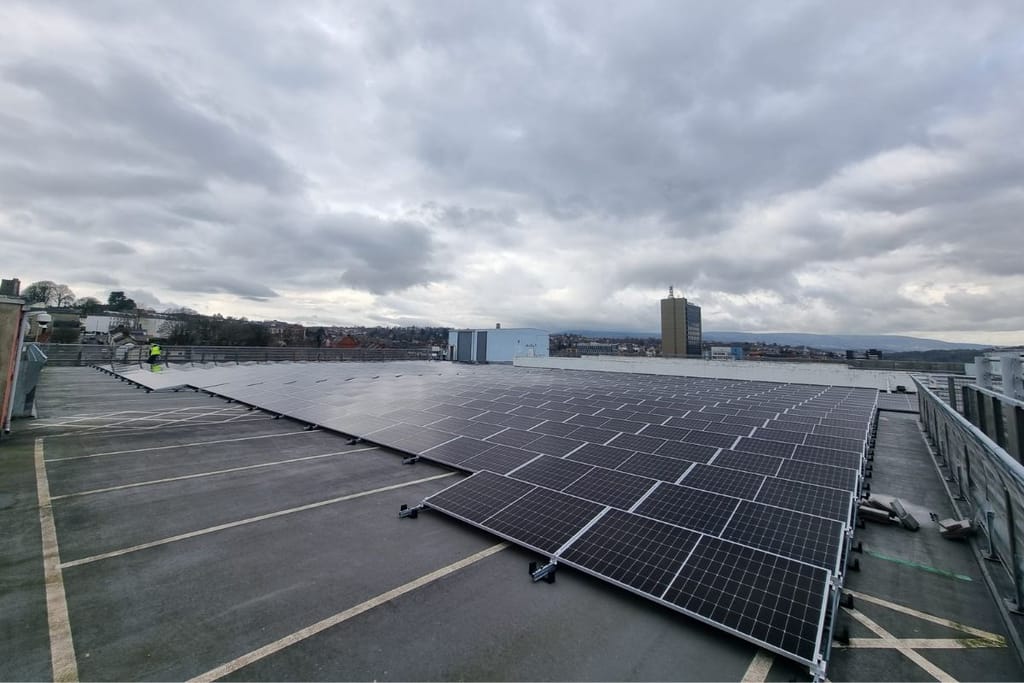
Understanding the payback period is essential for businesses considering solar. Unlike residential systems, commercial solar installations are usually larger and designed to meet higher daytime energy demands, which can significantly impact costs and savings.
Here’s an overview of typical commercial system sizes, their costs, potential savings and expected payback periods in the UK:
| System Size | Typical Installed Cost | Estimated Annual Energy Savings | Estimated Payback Period | Notes |
| 20 kW (Small commercial) | £16,000 – £30,000 | £4,500 – £7,000 | 4 – 5 years | Ideal for small businesses with consistent daytime electricity use. |
| 50 kW (Medium commercial) | £33,000 – £60,000 | £8,000 – £12,000 | 3 – 6 years | Suitable for businesses with larger roof space and higher energy demand. |
| 100 kW+ (Large commercial/industrial) | £60,000+ | £27,000 | 2 – 5 years | Often used for industrial buildings or multi-site operations |
Several factors influence these numbers, including the size and efficiency of the system, the business’s energy consumption patterns, and whether battery storage is included.
Factors That Affect Payback Period for Commercial Solar Panels
While the table above gives a good idea of typical payback periods, several key factors can influence how quickly a commercial solar system pays for itself:
Economies of Scale
One reason larger commercial solar installations can achieve faster payback is economies of scale.
Bigger systems typically have a lower cost per kilowatt because purchasing panels, inverters, and other equipment in bulk reduces the overall price. At the same time, they generate more electricity, which increases annual savings and helps the system pay for itself sooner.
According to the UK Government’s Department of Energy & Climate Change, “aggregator systems … appear to have reduced equipment cost due to the economies of scale associated with bulk buying solar panels and inverters.”
In practical terms, this means that while a small 20 kW system might have a payback period of 4–6 years, a larger 50 kW installation can achieve a similar return because the cost per kW is lower and the savings are higher.
Energy Usage Patterns
Your business’s electricity consumption profile is one of the most important factors influencing solar payback. Solar panels generate electricity during daylight hours, so the more of that energy your business can use directly, the greater your savings will be.
Companies with high daytime usage, such as offices, factories, or warehouses, can see faster payback than those with lower daytime demand.
In contrast, businesses that use most of their electricity outside of solar production hours may see slower payback, as excess electricity will need to be exported back to the grid at lower rates.
Electricity Costs
The price you pay for grid electricity has a direct impact on how quickly your solar investment pays off. The higher your electricity rates, the more financial benefit you gain from generating your own power.
For commercial businesses, this can vary widely depending on location, contract type, and peak demand charges:
Companies in areas with higher electricity rates or time-of-use tariffs benefit most, as solar panels generate power during the day when electricity is often most expensive.
With energy prices continuing to rise, the long-term value of self-generated electricity increases, meaning a system installed today may repay itself faster than initially expected.
Battery Storage
Installing a battery energy storage system allows your business to store excess solar energy produced during the day and use it later, for example, during peak tariff periods or outside of regular operating hours.
This increases self-consumption of your solar electricity, reduces the amount you need to buy from the grid, and can significantly improve the financial return of your system.
By making more of your solar generation usable on-site, batteries can help shorten the payback period and provide more predictable energy savings.
How Can We Help
To sum up, how long will solar panels take to pay for themselves?
For commercial businesses in the UK, payback periods typically range from 4 to 5 years, depending on system size, energy usage, electricity costs, and other factors.
At InspireGreen, we provide commercial solar solutions designed specifically for your business.
With our expertise, your business can use solar panels to reduce energy costs and increase self-consumption, all while staying compliant with energy regulations.
Get in touch today to discover how a commercial solar system can start paying for itself and provide long-term savings for your business.


