
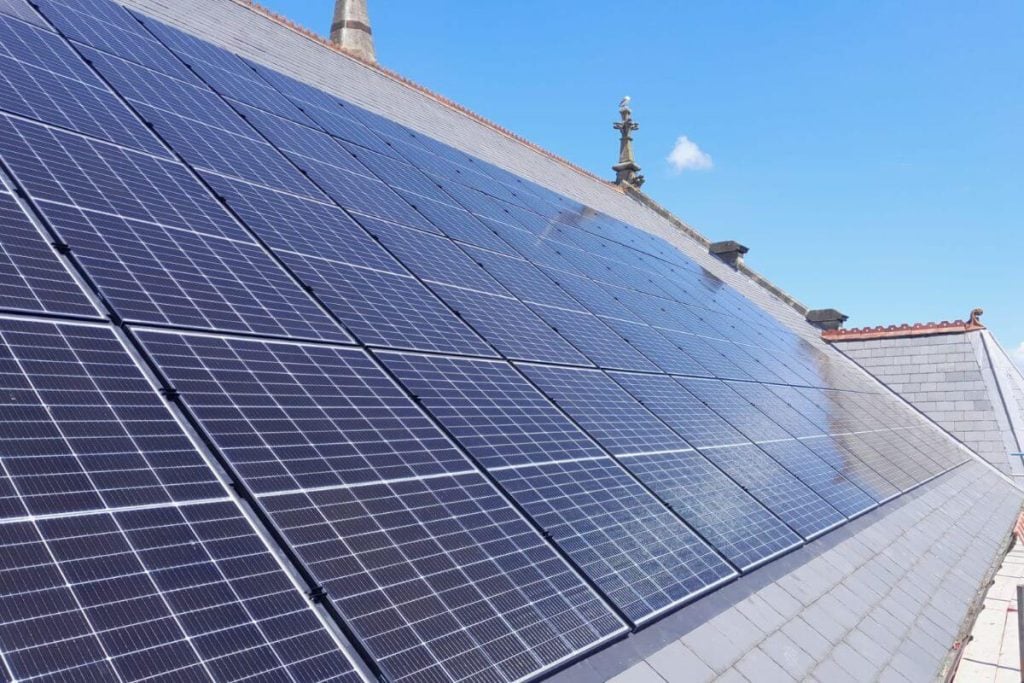
Integrated solar panels are built into your roof structure, sitting flush with your roof tiles rather than mounted on brackets above them. This creates a sleek, streamlined appearance that looks like your solar panels are part of the roof itself.
If you’re planning a new build or re-roofing your home or premises, integrated solar panels offer a stylish way to generate renewable energy while reducing the amount of traditional roofing materials you need.
In this guide, we’ll cover everything you need to know about integrated solar panels, how they work, their benefits and drawbacks, how they’re installed, and what you can expect them to cost.
How Do Integrated Solar Panels Work?
Integrated solar panels generate electricity in the same way as traditional solar panels, using the photovoltaic (PV) effect to convert sunlight into usable energy for your home or business.
These solar panels are ‘integrated’, because they are built straight into your roof structure and replace a section of roofing material. This means integrated solar panels perform two jobs at once: generating renewable energy and serving as a weatherproof part of the roof.
Integrated solar panels feature hidden mounting and flashing systems that keep them flush with the surrounding tiles on your roof, for a seamless appearance that doesn’t compromise roof integrity. This can also help you obtain permission to install solar panels on a listed building.
Thinking about re-roofing and want to include solar? Our integrated solar re-roofing service makes it easy to upgrade your roof or new build, while generating renewable energy for your business or home. Speak to our team to get started.
What Is the Difference Between Solar Panels and Integrated Solar Panels?
Integrated solar panels differ from traditional solar panels because they are built into your roof structure, rather than mounted on top of your existing tiles. Although both systems generate electricity in the same way, here are three important differences that affect installation, performance and maintenance:
1. Weight and Structural Impact
Integrated solar panels are generally lighter (around 10-20kg per panel) than traditional panels (typically 18-24kg). As they replace a section of your existing roof tiles rather than adding to them, they can reduce the overall weight on your roof. This makes integrated systems a good option if your roof structure cannot support the additional load of an on-roof system. For example, this was the case with the in-roof solar panels we installed for The Gate Arts Centre.
2. Efficiency
Integrated panels have less ventilation because they sit flush with the roof, making heat build up more easily. Warmer panels are less efficient, so you can expect around 6% lower performance compared to traditional on-roof systems, according to a study by Viridian. For context, while standard PV panels might achieve an efficiency of 16-22%, integrated panels typically sit closer to 6-17%.
3. Maintenance
Since integrated panels sit seamlessly within your roofline, there are fewer gaps for debris or birds to nest under. This can reduce maintenance needs. Integrated panels also benefit from improved wind resistance, as they don’t rely on external brackets that can be affected by stormy weather.
How to Install Integrated Solar Panels
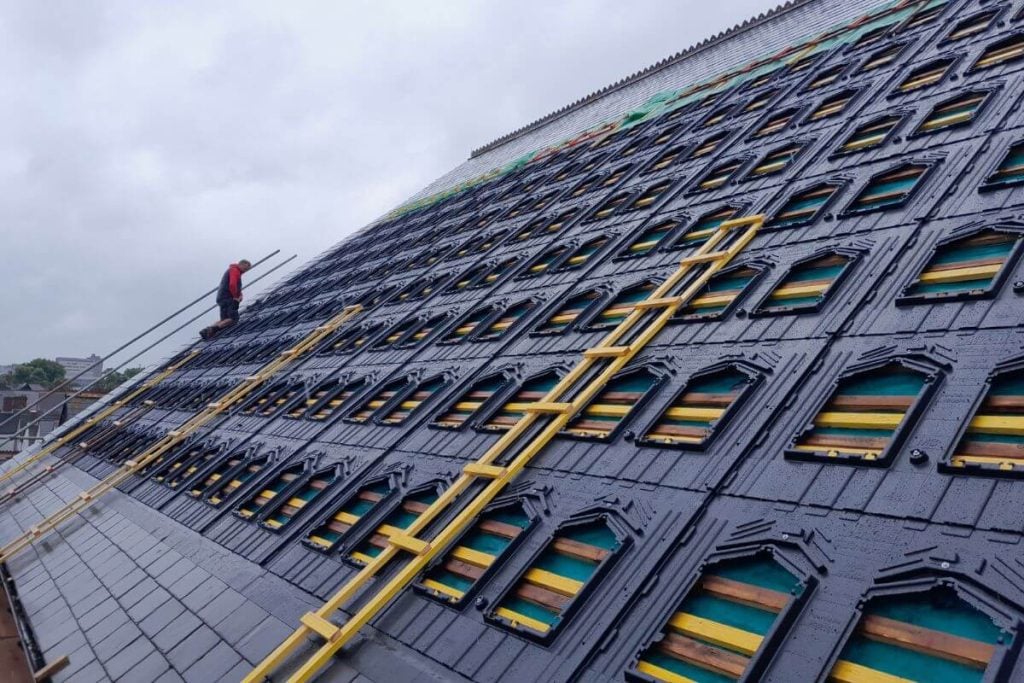
The best time to install integrated solar panels is during a new build or a full re-roofing project. This approach is simpler, faster, and more cost-effective than retrofitting them into an existing roof because the panels can replace a portion of the roofing materials, reducing your overall construction costs.
Before installation begins, your installer will assess the condition of your roof to ensure it can safely support the system. This includes checking the rafters, battens and roof underlay for signs of damage or deterioration. Any necessary repairs will need to be completed first but, if you’re already re-roofing, these steps would be part of the standard process anyway.
Once the roof has been prepared, the integrated solar panels are fitted into the roof structure. They are then connected to an inverter, which converts the generated electricity into a form your home or business can use. Although the panels form part of the roof, they aren’t a complete roof covering, so you’ll still need to install traditional roofing tiles or slates around your array.
How Much Do Integrated Solar Panels Cost?
The cost of installing integrated solar panels typically ranges from £5,000 to £8,000 for a typical 3-bedroom home. With annual energy savings of £660 to £1,300, many homeowners will see a payback period of around 6 years, depending on the system’s efficiency and household energy usage.
For commercial properties, costs vary more widely. Business installations can range from £10,000 to over £120,000, depending on roof complexity, system size, and whether additional components such as battery storage are included. Learn more about how solar panels work with your electric bill in our guide.
Although integrated solar panels are a significant upfront investment, there are important financial incentives to reduce costs:
- 0% VAT on solar installations: Homeowners and businesses under the threshold pay no value-added tax.
- Smart Export Guarantee (SEG): Allows you to earn up to £85 a year by selling excess electricity back to the grid.
If you’re installing integrated solar panels as part of a new build or full re-roofing, it’s also worth subtracting the cost of the roofing tiles they replace.
For example, in the case of our client, New Directions, initial roofing estimates exceeded £300,000. By integrating an in-roof solar PV system, we delivered substantial energy savings and sustainability benefits at a cost below initial roofing quotes.

How We Can Help
We hope this guide has helped you understand how integrated solar panels work and why they can be a smart choice for a new build or re-roofing project.
Integrated solar panels offer the same renewable energy generation as traditional PV systems, but with added aesthetic benefits and potential savings on roofing materials. The trade-off is a slight reduction in efficiency from reduced ventilation, which is worth considering when deciding which system works best for your home or business.
If you’re interested in exploring integrated solar panels further, visit our Re-roofing with Integrated Solar service page to learn more. You can also contact our team with any questions or to discuss how integrated solar panels could support your next renewable energy project.


